
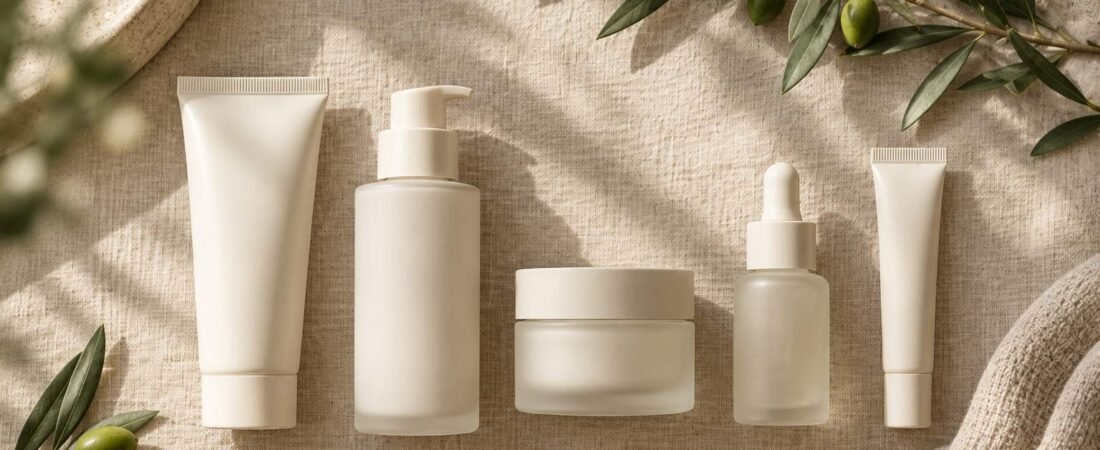
This is a skin care routine in your 30s that takes about five minutes in the morning and five at night, built from five steps: sunscreen, a gentle cleanser, a moisturizer, a retinoid and a short list of optional extras. For each step you get what to use, how to start without irritating your face, and how long to wait before deciding whether it works. At the end there’s a FAQ on eye creams, vitamin C, how much sunscreen to actually use and what to do when something stings.
One honest warning before we start: no routine undoes the sun exposure you already had, and none of this changes your genes or your bone structure. One step here has strong evidence behind it, one has decent evidence, and the rest are small improvements that are nice to have. I’ve written it in that order on purpose, so if you only ever do the first thing, you’ve still done the part that matters most.
What actually changes, and what a routine can change back
Skin in your 30s behaves differently than it did at 22. Cell turnover slows, so the surface looks duller for longer after a bad week. Collagen production declines gradually. The first fine lines show up where you move your face most, and old sun exposure starts surfacing as uneven tone rather than as a tan. None of that is a problem to be fixed; it’s just what the next decade looks like, and a routine’s job is to slow the preventable part and make the skin comfortable in the meantime.
The preventable part is mostly ultraviolet light, which is why sunscreen is the first step rather than a footnote. The FDA requires any sunscreen that isn’t broad spectrum, or that is below SPF 15, to carry a warning saying it has been shown only to help prevent sunburn, not skin cancer or early skin aging. Read that the other way around and it tells you exactly what to buy: broad spectrum, and not the lowest number on the shelf. The American Academy of Dermatology goes further and recommends broad spectrum, SPF 30 or higher, and water resistant.
The second-best-supported step is a retinoid. The AAD describes retinoids as vitamin A derivatives that speed up skin cell turnover and support collagen, which improves tone and reduces fine lines and wrinkles, and it separates over-the-counter retinol from prescription-strength tretinoin and tazarotene. The same page is blunt about the trade-off: they irritate, they are not for everyone, and they are not used in pregnancy.
A quick word on the numbers in this post. The amounts and timings come from the FDA and AAD pages linked above, not from a trial that compared routines head to head. The waiting times I give for each step are the normal ranges people are told to expect, not guarantees, and skin varies enough that your experience may differ. If you have a diagnosed skin condition, are pregnant or breastfeeding, or something here stings for more than a few minutes, a board-certified dermatologist is a better guide than any article.
The skin care routine in your 30s at a glance
| Step | When | What it’s for | Give it |
|---|---|---|---|
| Sunscreen | Every morning | The one step with the strongest evidence | Years, quietly |
| Gentle cleanser | Night, and morning if you want | Removes the day without stripping | A few days |
| Moisturizer | Morning and night | Comfort, and it makes the retinoid bearable | A week or two |
| Retinoid | A few nights a week | Tone, texture, fine lines | Three to six months |
| Optional extras | As you like | Small, incremental gains | Two to three months |
Five products, and two of them are things most people already own. If you’re starting from nothing, buy the sunscreen and the moisturizer first and add the rest one at a time, a few weeks apart. Adding four new products on the same Monday is the most reliable way to end up with an irritated face and no idea which one caused it.
Sunscreen is the step that earns its place
If you do one thing from this list, do this one. It’s also the step people quietly skip in winter, on cloudy days and when they’re only going as far as the car, which is exactly when the daily part stops being daily.
How to do it
- Pick a broad spectrum sunscreen at SPF 30 or higher that says water resistant on the label.
- Apply it to dry skin about 15 minutes before you go out, as the last step of your morning routine.
- Use enough. The AAD puts it at about a teaspoon for the face alone, and roughly an ounce, a shot glass, for all exposed skin. Most people use a fraction of that and get a fraction of the protection.
- Don’t stop at the jawline. Ears, the sides of the neck, the back of the hands.
- Reapply about every two hours outdoors, and after swimming or sweating.
If you hate how it feels
| Complaint | What to try |
|---|---|
| Greasy or heavy | A fluid or gel formula rather than a cream; let it set for two minutes before dressing |
| White cast | A chemical or tinted formula; tinted versions also help with visible light |
| Stings around the eyes | A mineral stick applied along the orbital bone instead of a lotion |
The myth worth dropping: a higher SPF does not let you stay out longer between applications. The AAD says so directly. SPF 50 is not a license to skip the two-hour reapplication; it just starts you from a slightly better place.
A cleanser should take off the day, not strip your face
In your 20s, skin tolerates a harsh cleanser by producing more oil. In your 30s it often just goes tight and flaky instead. The fix isn’t an expensive product; it’s a milder one used less often.
How to do it
- At night, wash with a gentle cleanser that rinses clean and leaves your face comfortable, not squeaky.
- Use lukewarm water. Hot water feels great and leaves skin tighter.
- In the morning, plain water is enough for a lot of people. If you wear heavy sunscreen or have oily skin, cleanse properly; otherwise it’s optional.
- Pat dry rather than rubbing, and move on to the next step while the skin is still slightly damp.
How to tell it’s wrong for you
| Sign | What it means |
|---|---|
| Tight for more than a minute after rinsing | Too stripping; switch to a cream or milk formula |
| Still slick after rinsing | Not clearing sunscreen; try a dedicated first cleanse at night |
| Flaking around the nose and mouth | Usually the cleanser plus a retinoid; reduce the retinoid first |
The double cleanse, honestly: it’s genuinely useful if you wear long-wear makeup or a thick mineral sunscreen, and pointless if you don’t. An oil or balm first, then the usual cleanser. On a bare-skin day it’s one more step for nothing.
Moisturizer is boring and it’s doing more than you think
A moisturizer doesn’t change the structure of your skin. What it does is keep the surface comfortable and intact, which is what lets you tolerate the step that does change something. Plenty of people quit retinoids because of irritation that a decent moisturizer would have prevented.
How to do it
- Apply it to slightly damp skin, morning and night, before sunscreen in the morning.
- Match the texture to your skin and the season: a light lotion or gel if you’re oily, a cream if you’re dry, and expect to switch when the heating goes on.
- Look for the unglamorous ingredients that do the work: glycerin, hyaluronic acid, ceramides, squalane, panthenol.
- If your skin feels tight by midday, you need more moisturizer, not more actives.
Match it to the season
| Situation | What usually works |
|---|---|
| Oily, humid summer | A light gel-cream, same product morning and night |
| Dry, heated winter | A richer cream at night, light lotion in the morning |
| Irritated from a retinoid | Moisturize before and after the retinoid for a week |
The sandwich trick: if a retinoid is too much, put moisturizer on first, then the retinoid, then moisturizer again. It softens the hit without stopping the retinoid working, and it’s the difference between quitting in week two and still going in month four.
A retinoid is the step that changes something, if you survive the first month
This is the second-strongest step in the list and the one people get wrong most often, because the instinct is to use more, sooner. The AAD’s advice is the opposite: start with the least intense formula you can find, use it every other night, and build up slowly.
How to do it
- Start with an over-the-counter retinol, not a prescription strength, unless a dermatologist has given you one.
- Use it at night only. Retinoids make skin more sun-sensitive, which is the other reason the morning sunscreen matters.
- Apply a pea-sized amount to a dry face, twice a week for the first fortnight, then every other night if that’s comfortable.
- Avoid the eyelids and the corners of the nose and mouth, where irritation starts.
- Moisturize afterwards, every time, for at least the first month.
Where to start and where to go
| Level | What it looks like |
|---|---|
| Starting | Low-strength retinol, twice a week, moisturizer on top |
| Settled | Every other night, same product, no stinging |
| Further | Nightly, or a prescription retinoid after talking to a dermatologist |
Who should not start one: the AAD says retinoids are not used during pregnancy, and that people with significant redness or inflammation should ask a dermatologist about other options first. It also notes that irritation can leave dark marks, especially on deeper skin tones, which is a good reason to go slowly rather than pushing through a stinging face.
The optional extras, ranked honestly
Everything above is the routine. What follows is what you add when the basics are boring and consistent, which is the right time to add anything. None of these will carry a routine on their own.
What each one is for
| Extra | What it’s reasonably good for | When to use it |
|---|---|---|
| Vitamin C | Uneven tone and dullness; pairs with sunscreen | Morning, before moisturizer |
| Niacinamide | Redness, oiliness, general tolerability | Either, and it plays well with most things |
| Exfoliating acids | Texture and flakiness | One or two nights a week, not the same night as the retinoid |
| Eye cream | Comfort and a smoother base for concealer | Optional; a plain moisturizer often does the same job |
The rule that keeps this manageable: add one product at a time and give it two to three months before deciding. If you add three at once and your skin improves, you’ve learned nothing about which one to keep buying, and if it reacts, you’ve learned nothing about what to stop.
Two things are worth leaving on the shelf. The first is anything sold mainly on a promise rather than an ingredient: if the label talks about reversing years and the ingredient list is a fragrance and three plant extracts, you’re paying for the sentence. The second is a routine with four actives in it, which is how most people end up with a compromised skin barrier and a bathroom shelf full of products they’re now afraid to use. A short routine you understand beats a long one you inherited from a video.
How to fit it into a real week
The morning is cleanser or water, moisturizer, sunscreen. The evening is cleanser, retinoid on retinoid nights, moisturizer. That’s it. On a tired night, washing your face and putting on moisturizer is a complete routine; the retinoid can wait a day, and skipping it occasionally costs you nothing.
Consistency beats intensity here in a way that’s hard to overstate. A plain routine done five nights a week for a year will do more than an elaborate one abandoned in March. It’s the same logic as the evening routine for better sleep: the version you keep is the version that works.
Questions people ask about a skin care routine in your 30s
Do I need to start using more products in my 30s?
Not more, just a couple of specific ones. The step most people are missing isn’t an expensive serum, it’s daily sunscreen, and after that a retinoid a few nights a week. Everything else is optional and small by comparison.
How much sunscreen is enough for my face?
The AAD says at least a teaspoon for the face, and about an ounce for all exposed skin. If a bottle lasts you a whole summer, you’re almost certainly using too little.
Is an expensive moisturizer better?
Not reliably. What matters is the texture suiting your skin and whether you’ll use it twice a day. The useful ingredients — glycerin, ceramides, hyaluronic acid, squalane — turn up at every price.
How long before I see anything from a retinoid?
Give it three to six months before judging it, and expect the first few weeks to look worse rather than better while your skin adjusts. If you’re still red and flaking after a month at twice a week, that’s a sign to slow down, not to push harder.
Can I use vitamin C and a retinoid together?
Yes, just not at the same time of day. Vitamin C in the morning, retinoid at night is the simple version, and it avoids stacking two potential irritants on the same skin at once.
Is any of this going to remove my fine lines?
No, and anything promising that is selling something. A retinoid can soften fine lines and improve tone over months, and sunscreen slows the rate at which new damage accumulates. Expression lines where your face moves are not a product problem.
Five steps, about ten minutes a day, and only two of them are doing most of the work. Start with sunscreen every morning and a moisturizer you actually like the feel of, add a low-strength retinoid a few weeks later, and leave the extras until all of that is automatic. The point of a skin care routine in your 30s isn’t to turn the clock back; it’s to keep your skin comfortable now and to slow the part of the change that was ever in your control.