

This post is a simple evening routine for better sleep: five small steps that fit around a normal, busy life, with no gadgets, supplements or hour-long rituals. For each step you get what to do, why it’s worth trying, and what the research actually shows (and doesn’t). At the end there’s a short FAQ on sleep hours, trackers and what to do when a night goes wrong.
One honest warning before we start: an evening routine is not a treatment for a sleep disorder, and it can’t promise you a perfect night. In a 2025 survey run for the American Academy of Sleep Medicine, 76% of U.S. adults said they had lost sleep because of worries about their sleep problems. Chasing perfect sleep can become one more source of stress, which is why this plan is deliberately small and forgiving.
Why so many people are chasing better sleep right now
Better sleep has turned into a project. In the American Academy of Sleep Medicine (AASM) survey of 2,007 U.S. adults, fielded in June 2025, 48% said they had used a sleep tracking device such as a smartwatch or app, up from 35% in 2023. The same page describes “sleepmaxxing”, the social media trend of optimizing every part of your sleep with trackers, gadgets and strict rituals. The AASM’s own headline says tracking and sleepmaxxing can change bedtime behavior “and keep some Americans awake at night.”
Phones play a part too. In a Pew Research Center survey of 9,750 U.S. adults in May and June 2026, 41% said their phone hurts their sleep, and only 5% said it helps. If you want the phone side of the story, my post on offline hobbies and a gentle 7-day plan goes deeper.
How much sleep are we aiming for? The CDC recommends 7 or more hours for adults aged 18 to 60, 7 to 9 hours for ages 61 to 64, and 7 to 8 hours for ages 65 and older. The CDC’s tips are refreshingly plain: keep a consistent schedule, keep the bedroom quiet, relaxing and cool, turn off electronic devices at least 30 minutes before bed, avoid large meals and alcohol before bedtime, and avoid caffeine in the afternoon or evening. The plan below is built around those basics, plus three studies that explain why they matter.
A quick word on the numbers: the AASM figures come from an online survey commissioned by the AASM and run by Atomik Research, with a margin of error of about 2 percentage points, and Pew’s figures are self-reported too. Surveys tell us what people say they do and feel; they can’t show that any routine causes better sleep. The three studies I cite later are also narrow: one used a single 400 mg caffeine dose, one compared two ways of reading before bed, and one pooled a small number of warm-bath trials. Treat all of it as a reasonable starting point, not a guarantee.
The evening routine for better sleep at a glance
Here are the five steps side by side, with how strong the support is for each. If you only have energy for one, start with the first.
| Step | When | Time it takes | What backs it up |
|---|---|---|---|
| 1. Fix your wake-up time | Every morning | 0 minutes | CDC guidance on a consistent schedule |
| 2. Set a caffeine cutoff | Early afternoon | 0 minutes | Randomized trial (400 mg dose) and CDC guidance |
| 3. Take a warm shower or bath | 1 to 2 hours before bed | 10 minutes or more | Meta-analysis, small evidence base |
| 4. Switch screens off | 30 minutes or more before bed | 30 minutes | Laboratory study and CDC guidance |
| 5. Make the bedroom calm | Last 15 minutes | 15 minutes | CDC guidance |
Step 1: fix your wake-up time first

The first step of any evening routine for better sleep happens in the morning. The CDC’s first tip is to keep a consistent sleep and wake schedule every day. In practice, you can’t force yourself to fall asleep at 10:30 pm, but you can choose when you get up. If you ask me, the wake-up time is the easier end of the schedule to control, so that’s the one I’d fix first and let bedtime follow.
How to do it
- Pick a wake-up time you can keep on most days, including weekends if possible.
- Count backward from it. If you want 7 hours of sleep (the CDC’s minimum for adults up to 60), your target bedtime is 7 hours earlier, plus the time it takes you to fall asleep.
- Set one alarm for that wake-up time and one gentle reminder for the start of your wind-down.
- If you’re far off today, move the wake-up time by 15 minutes every few days instead of changing everything at once.
The lazy version: keep your weekday wake-up time on weekends for the first two weeks and see how you feel. A weekend lie-in of an hour is a lot less disruptive than a three-hour one, and you can always decide later how much flexibility you want.
Step 2: set a caffeine cutoff that you can actually keep

The CDC says to avoid caffeine in the afternoon or evening, which is vague. A more specific answer comes from a randomized, placebo-controlled study in the Journal of Clinical Sleep Medicine. Researchers gave people a fixed 400 mg dose of caffeine 0, 3 or 6 hours before their usual bedtime, and found that caffeine at each timing disturbed sleep compared with placebo, with total sleep time still reduced when it was taken 6 hours before bed. The authors concluded that avoiding substantial caffeine for at least 6 hours before bedtime makes sense.
A caution on that number: 400 mg is a large dose, and people differ a lot in how they react to caffeine. A small afternoon coffee may affect you less than the study dose did, and some people are sensitive even to a morning cup. The 6-hour rule is a useful starting point, not a law.
How to do it
- Work out your cutoff: subtract 6 hours from your usual bedtime. If you go to bed at 11 pm, your last caffeine is at 5 pm. If you’re sensitive, try noon or 1 pm instead.
- Remember that caffeine isn’t only coffee. Tea, cola, energy drinks, pre-workout powders and some pain relievers contain it.
- Replace your afternoon cup with something warm and caffeine-free, so the habit stays and only the caffeine goes.
- Give it two weeks before judging the result.
The lower-effort version: keep your morning coffee exactly as it is and only move the afternoon cup. That one change is often enough to see whether caffeine is part of your problem.
Step 3: use a warm shower or bath as your wind-down signal

This is the step I’d call the most pleasant and the least certain. A 2019 systematic review and meta-analysis in Sleep Medicine Reviews searched six databases and included 17 studies, 13 of which had data for the analysis. It found that warm water at 40 to 42.5 °C (about 104 to 108.5 °F) was associated with better self-rated sleep quality and sleep efficiency, and that a shower or bath taken 1 to 2 hours before bedtime for as little as 10 minutes significantly shortened the time it took to fall asleep.
The authors suggest a reason: warm water increases blood flow to the hands and feet, which helps the body release heat and lowers core body temperature afterwards. They also say more research is needed on the best timing and duration, because the evidence base is small. So this is an experiment worth running, not a proven fix.
How to do it
- Aim for comfortably warm, not scalding. The studied range is up to about 108 °F, and hotter isn’t better.
- Time it 1 to 2 hours before you want to be asleep, and stay in for at least 10 minutes.
- After you get out, keep the lights low and skip the heavy skincare routine or the work email.
- If you already shower in the morning, try a short warm evening shower three nights in a row and compare how you fall asleep.
The faster version: a 10-minute warm shower still fits the research, and it’s easier to keep up than a full bath. Save the bath for the weekend if you like the ritual.
Step 4: switch screens off earlier than feels natural
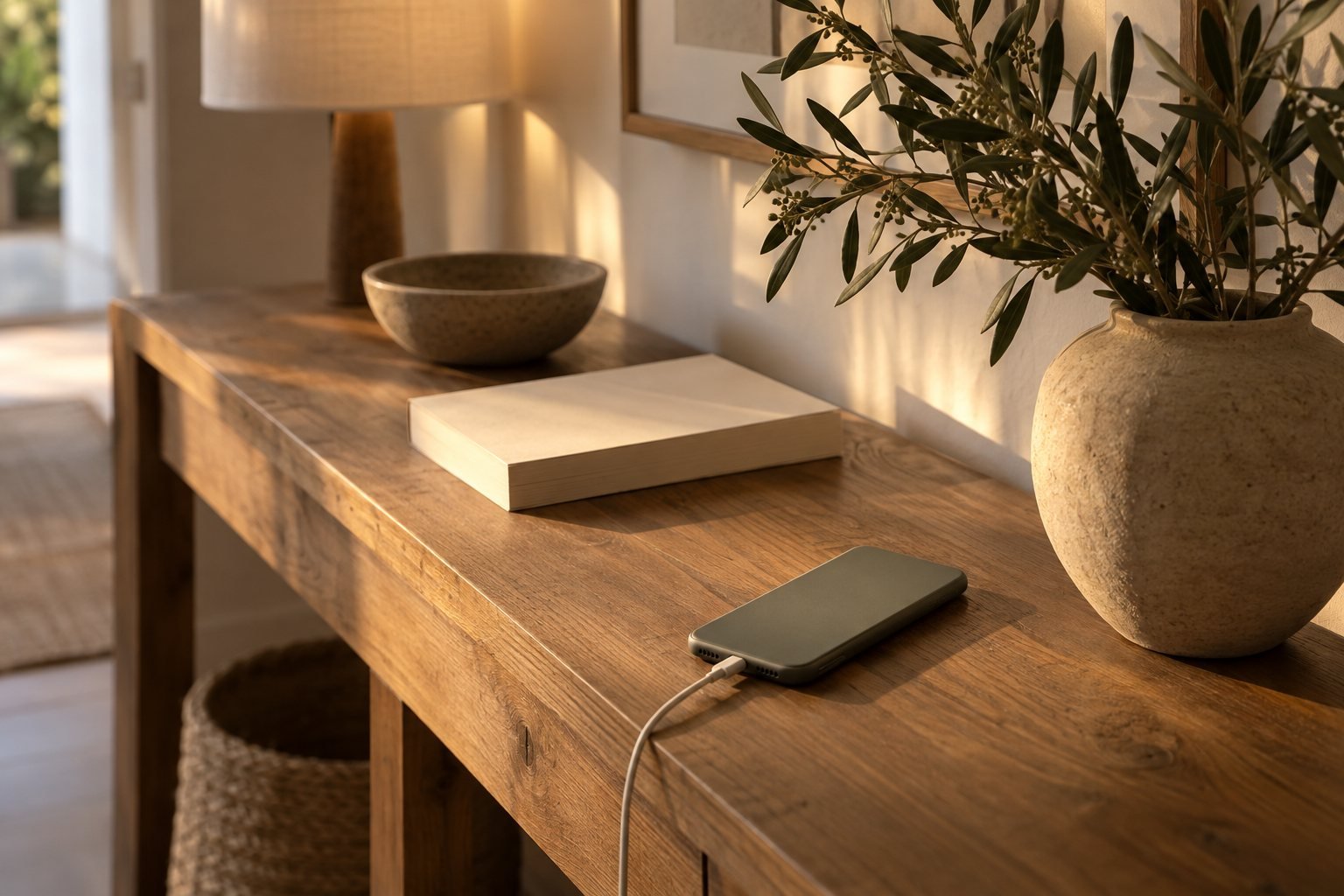
Screens are the part everyone expects to hear about, and the evidence is stronger than you might think. The CDC recommends turning off electronic devices at least 30 minutes before bed. In a laboratory study in PNAS, people who read on a light-emitting eReader before bed took longer to fall asleep, felt less sleepy in the evening, released less melatonin, had a later body clock and were less alert the next morning than when they read a printed book. It’s a narrow comparison, but it points the same way as the CDC’s tip.
My own addition, which isn’t from any study: the hardest part isn’t switching the screen off, it’s not picking the phone up again. Putting the phone somewhere you can’t reach from bed removes the decision. That’s why I’d charge it in another room if you can. If you use the phone as an alarm, a cheap alarm clock solves that problem for a few dollars.
How to do it
- Choose a “screens off” time at least 30 minutes before your target bedtime.
- Charge your phone outside the bedroom, or at least across the room and face down.
- Keep one easy replacement within reach: a paperback, a notebook or a stretching mat.
- Do your last check of messages and tomorrow’s calendar before the cutoff, so nothing is left hanging.
The in-between version: if 30 minutes feels impossible, start with 15 and add 5 minutes each week. A screen-free half hour is a habit you build, not a switch you flip.
Step 5: make the last 15 minutes calm, cool and boring

The final step is about the room itself. The CDC says to keep the bedroom quiet, relaxing and cool, and to avoid large meals and alcohol before bedtime. None of that is exotic, and most of it costs nothing. A cooler room pairs nicely with the warm shower from step 3, since the body is already cooling down from it.
Think of this as the “boring on purpose” step. You’re not trying to relax perfectly; you’re making the room and the last few minutes predictable so your brain learns the pattern. A printed book is a good choice here, since the eReader study found that print didn’t cause the same delays.
How to do it
- Dim the lights in the house about 30 minutes before bed and use a low, warm lamp in the bedroom.
- Make the room a little cooler than the rest of your home, and open a window if the weather and noise allow it.
- Finish dinner a couple of hours before bed when you can, and skip the nightcap.
- Do the same two or three quiet things in the same order: a few pages of a book, a short stretch, lights out.
The travel version: pack a small book and an eye mask. Two items and the same last 15 minutes are enough to carry the routine into a hotel room.
What about sleep trackers and sleepmaxxing?
Trackers aren’t the enemy, but they aren’t required. The AASM survey found that nearly half of U.S. adults had used one, and the same group’s headline warns that tracking and sleepmaxxing can keep some people awake. If a tracker motivates you to keep a schedule, great. If checking the score makes you anxious in the morning, take that as a sign to stop looking at it for a few weeks.
It’s also worth remembering that consumer devices estimate sleep; they don’t measure it the way a sleep lab does. Use the trend as a rough hint, and trust how you feel more than any number on a screen. That isn’t a reason to ignore data, only to keep it in proportion, which is the same idea behind this whole plan: small habits over big overhauls.
When a routine isn’t enough
An evening routine can help with ordinary, occasional bad sleep. It’s not the right tool for everything. If your sleep problems go on for weeks, if you snore loudly or others notice you stop breathing at night, or if you feel very sleepy during the day, talk to a doctor or a sleep specialist. This post is for educational purposes and isn’t medical advice, and no routine replaces a proper check when something may be wrong.
Questions people ask about an evening routine for better sleep
How long should an evening routine take?
Most of this plan overlaps, so it takes less time than it looks. The warm shower happens an hour or two before bed, the screen cutoff covers the last half hour, and the bedroom steps take about 15 minutes. Steps 1 and 2 take no extra time at all. If you have to cut something, cut the shower first and keep the wake-up time, the caffeine cutoff and the screens-off time.
How many hours of sleep do adults need?
The CDC lists 7 or more hours for ages 18 to 60, 7 to 9 hours for ages 61 to 64, and 7 to 8 hours for ages 65 and older. Individual needs vary, so judge by how you feel during the day as well as by the hours.
Is a warm shower or a warm bath better before bed?
The 2019 meta-analysis looked at both and found a benefit for either, as long as the water was warm (40 to 42.5 °C) and it happened 1 to 2 hours before bed. A 10-minute shower is the easier habit for most people, so start there.
Do I need a sleep tracker to do this?
No. Every step in this plan works without one. If you do use a tracker, treat the numbers as a rough guide and stop looking at them if they make you worry about sleep, since worry itself costs sleep for many people.
What if I skip a night of the routine?
Nothing breaks. One late night or a missed step doesn’t undo the habit, so just pick the routine up again the next evening. A routine you can repeat most nights beats a perfect one you abandon after a week.
If you try only one thing this week, fix your wake-up time and move your last coffee earlier. Add the screens-off time next, then the warm shower and the calm bedroom when the first steps feel easy. Give each change a couple of weeks, notice what actually helps you, and drop whatever doesn’t. Better sleep is built from small, boring evenings.