
Lists of high protein foods are usually written as rankings, as though the job is to find the food with the biggest number. The more useful question is how much you need and how close an ordinary day already gets you, because for most people the gap is smaller than the internet suggests. This post covers what the official recommendation actually is, what is really in a normal serving of twenty everyday foods, and three ordinary days that reach it without anything being reorganized.
One honest warning before we start: more is not automatically better. The Cleveland Clinic’s guidance notes that a protein deficiency is unlikely in a healthy adult with a typical digestive tract and a varied diet, and that too much protein can put the kidneys at risk alongside other unwanted effects. If you have kidney disease, are pregnant, or are managing a condition where protein intake has been discussed with you, that conversation belongs with your own clinician rather than with a blog post or a supplement label.
How much you actually need
The recommendation is lower than most people assume. The National Academy of Medicine sets a minimum of 0.8 grams of protein per kilogram of body weight per day, which Harvard’s nutrition source translates as a little over 7 grams for every 20 pounds of body weight. That works out to roughly 50 grams a day for a 140-pound person and roughly 70 grams for a 200-pound person. The Cleveland Clinic gives the same rule of thumb and the same 50-gram example.
Set that against the second finding, which gets much less airtime: deficiency is uncommon among healthy adults in the US, and many people are already getting more than enough, particularly from animal foods. The reason to read a list of high protein foods is usually not that you are short. It is that you want more of a day’s protein to arrive at breakfast rather than all at dinner, or you are moving away from meat and want to know what replaces it.
There is one group where the picture genuinely differs. Research on protein and muscle in older adults has argued that the 0.8 gram figure, set as a minimum to prevent deficiency, may sit below what is useful for maintaining muscle later in life, and reviews in that area have proposed higher intakes for people over about 65. That is an active discussion rather than a settled number.
A quick word on the numbers: an RDA is a population minimum designed so that nearly everyone is covered, not a personal target and not an optimum. The per-serving figures below come from food composition data, which means they are averages across samples. A chicken breast is not exactly 27 grams of protein; it is near enough that the planning works, and that is all these numbers are for.
What a normal serving actually holds
These are the figures that make the arithmetic obvious. Twenty everyday foods, at the serving size a person would really eat.
| Food | Serving | Protein | Worth knowing |
|---|---|---|---|
| Chicken breast | 3 oz | 27 g | Half a day’s minimum in one piece |
| Turkey breast | 3 oz | 26 g | Interchangeable with chicken |
| Lean ground beef (93%) | 4 oz | 24 g | More fat than poultry, same ballpark |
| Canned tuna in water | 3 oz | 20 g | The cheapest reliable option |
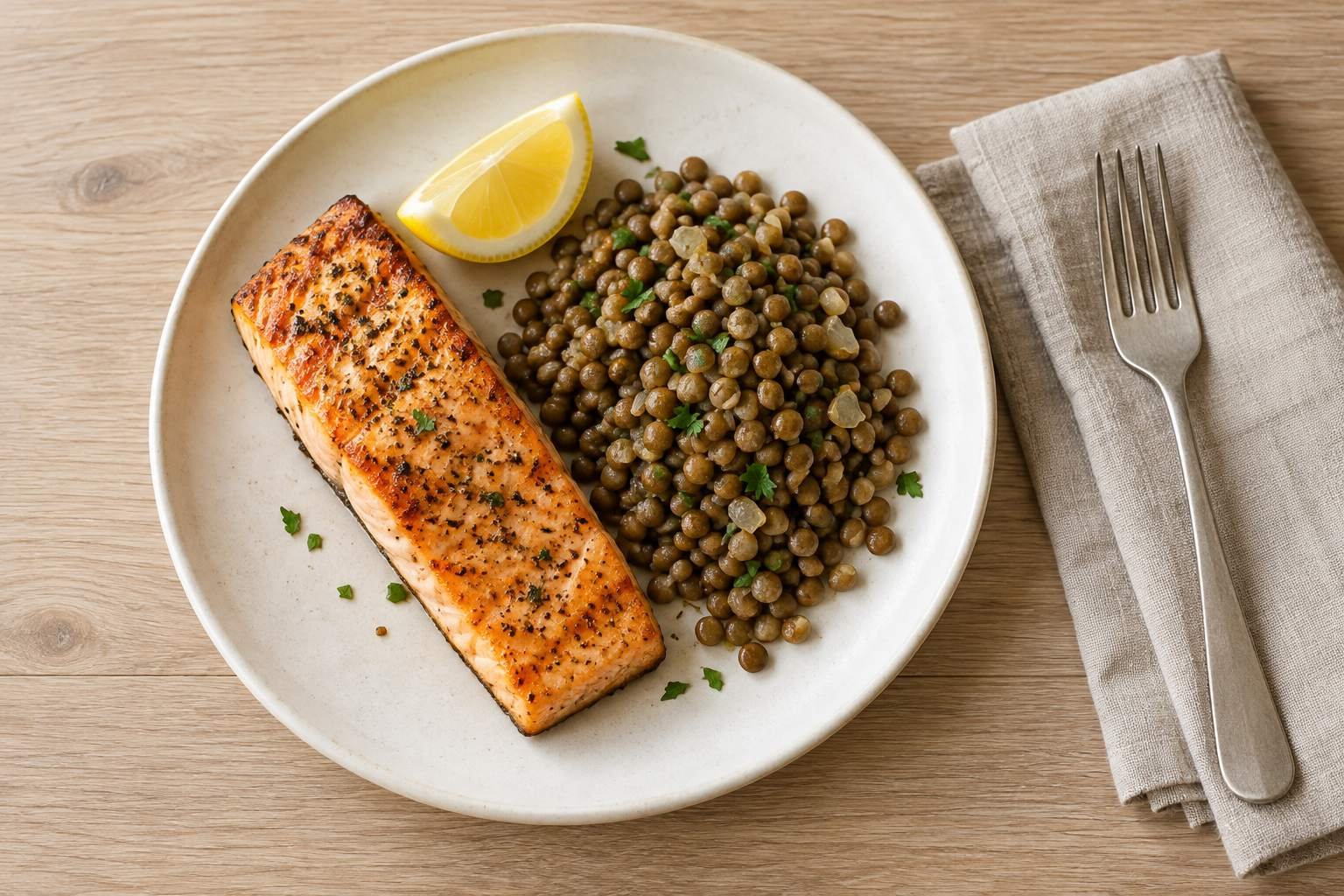
| Salmon | 3 oz | 19 g | Lower than people expect |
| Tempeh | 3 oz | 18 g | The strongest plant option by weight |
| Chickpeas | 1 cup | 15 g | Needs a full cup to compete |
| Cottage cheese (1%) | 1/2 cup | 14 g | The most protein per spoonful in the fridge |
| Egg whites | 4 whites | 13 g | More than two whole eggs |
| Whole eggs | 2 large | 12 g | Less than most people assume |
| Greek yogurt, fat-free | 1/2 cup | 11 g | Double ordinary yogurt |
| Tofu | 3/4 cup | 10 g | Varies a lot by firmness |
| Edamame | 1/2 cup | 9 g | The only snack here in double figures |
| Lentils | 1/2 cup cooked | 9 g | 18 g in a full cup |
| Pumpkin seeds | 1/4 cup | 9 g | Easy to add to anything |
| Split peas | 1/2 cup cooked | 8 g | Soup does the work |
| Milk or soy milk | 1 cup | 8 g | Identical, which surprises people |
| Peanut butter | 2 tbsp | 8 g | Comes with a lot of fat |
| Peanuts | 1 oz | 7 g | Almonds are 6 g |
| Rolled oats | 1/2 cup | 5 g | Not nothing, from a food nobody counts |
Read the column twice and the pattern appears. One piece of chicken is half the daily minimum for a 140-pound person. A bowl of cottage cheese and a cup of milk is another 22 grams. The 50-gram figure stops looking like a project.
The foods that do the heavy lifting
Four things in that table carry most of the weight, and they are not the fashionable ones. The foods that get written up as high protein foods tend to be the novel ones, because a list of chicken, eggs and milk is not interesting to publish. It is, however, what most days are actually made of.
Poultry and lean beef sit at 24 to 27 grams a serving, which no plant food on the list matches at a realistic portion. If meat is part of how you eat, one portion a day does half the job and the rest is incidental.
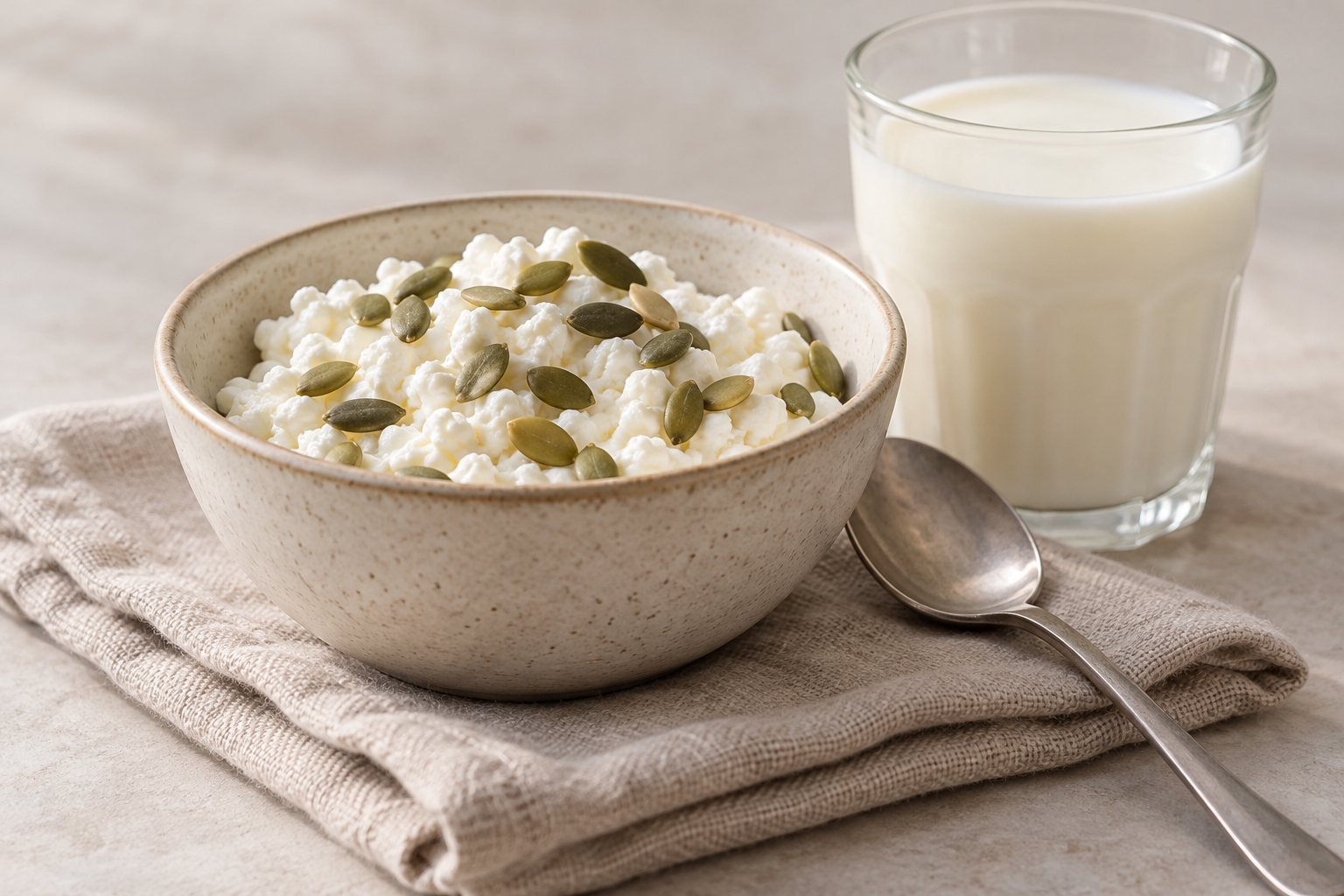
Cottage cheese is the quiet one. Fourteen grams in half a cup, eaten cold, requiring no cooking and no decisions, which makes it the most useful thing in the fridge on a morning when you have neither. Greek yogurt is close behind at 11.
Canned fish is where the cost argument lives. Tuna in water is 20 grams a serving from a tin that keeps for years, and it is the reason a protein-light week is rarely about money.
What these four have in common is that none of them needs a recipe. That matters more than it sounds: the reason a day ends up protein-light is almost never that someone could not find a suitable food, it is that the suitable food needed twenty minutes and a pan at a moment when neither existed.
Eggs deserve a correction rather than a recommendation. Two large eggs are 12 grams, not the 20 or so that their reputation implies. They are a good food and a modest protein source, and building a breakfast around them alone leaves you lower than you think.
Where plant protein actually lands
The honest summary is that plant foods get there, with larger portions and more planning.
Tempeh at 18 grams per 3 ounces is the only plant food on the list that competes with meat serving for serving. Everything else needs volume: a full cup of chickpeas for 15 grams, a full cup of lentils for 18. That is a substantial bowl rather than a side, and it is the single most common reason people moving away from meat end up lower than they intended. They swap a chicken breast for a half-cup of beans and lose 18 grams without noticing.
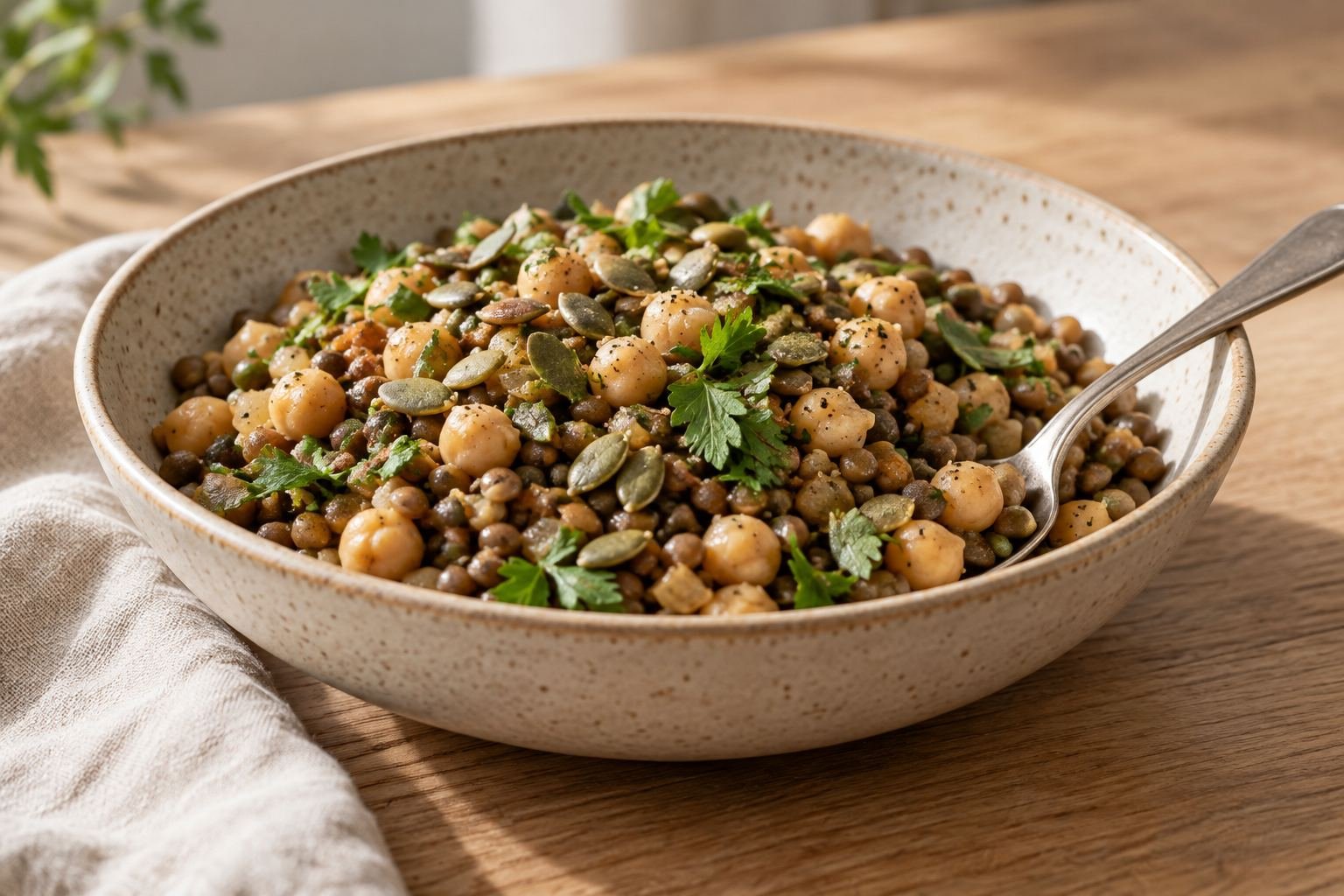
The fix is stacking rather than substituting. Lentils plus pumpkin seeds plus a cup of soy milk is 9 plus 9 plus 8, which is 26 grams from things that do not look like a protein dish. Our everyday bowls are built on that logic: several moderate sources in one bowl rather than one large one.
Portion honesty is the whole game here. Half a cup of cooked lentils is 9 grams and looks like a serving on a plate; a full cup is 18 and looks like a meal. Neither number is wrong, and almost every disagreement about whether plant protein is adequate turns out to be two people picturing different bowls.
Milk and soy milk both landing on 8 grams a cup is worth holding onto, because it means the dairy swap that worries people most is, on this one measure, not a swap at all. Almond milk is a different story and is not on the list for that reason.
Three ordinary days that get there
Nothing reorganized, no powders, no weighing. Each of these clears 50 grams.
A day with meat in it. Oats with milk at breakfast is 13. A tuna sandwich at lunch is 20. Chicken with whatever else is on the plate at dinner is 27. That is 60 grams before anything else you ate counts, and none of it required a decision.
A day without meat. Greek yogurt with pumpkin seeds is 20. A chickpea bowl at lunch is 15. Tempeh with vegetables at dinner is 18. That lands at 53, and the only part needing attention is that the lunch has to be a full cup of chickpeas rather than a scattering.
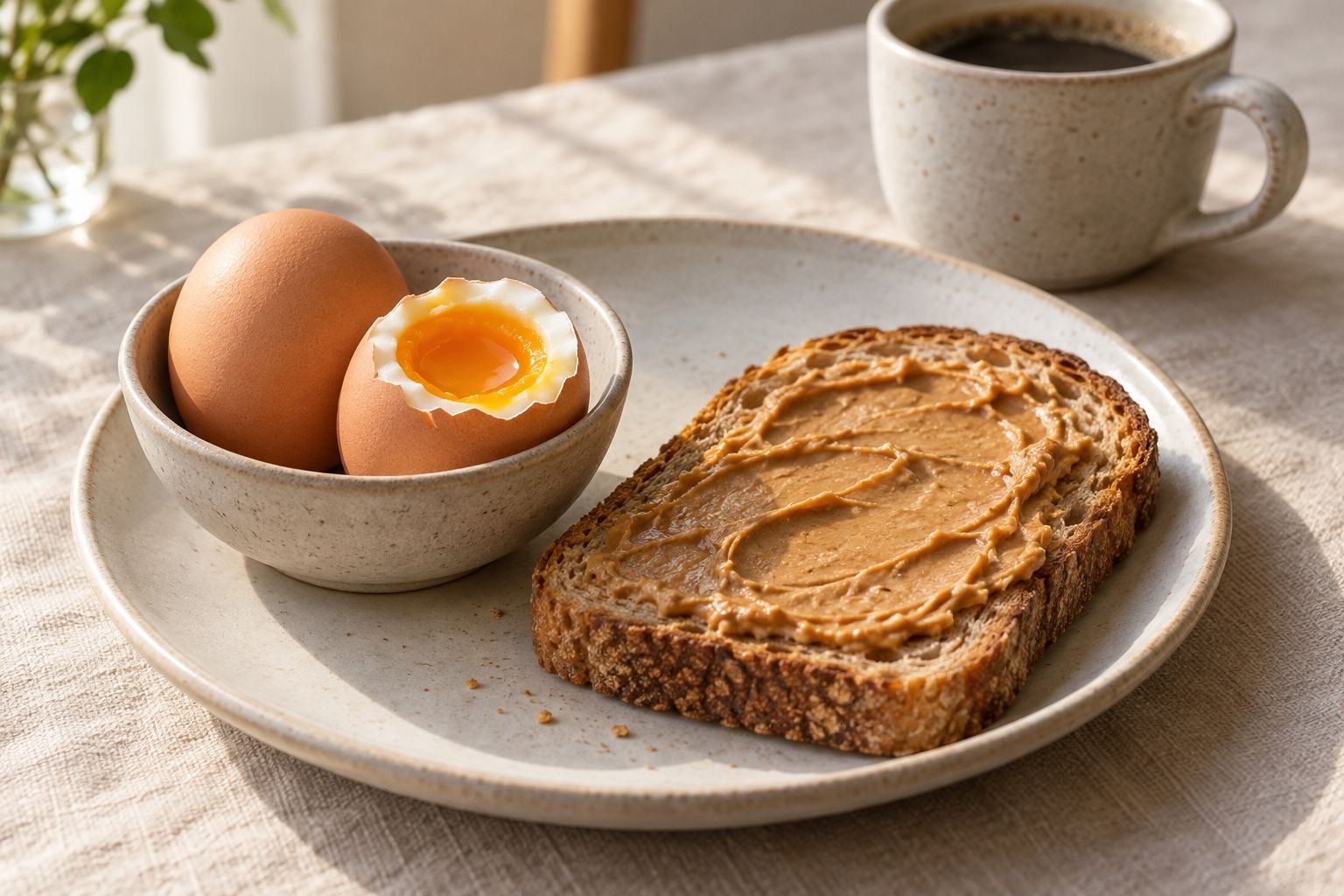
A day you did not plan. Two eggs and a coffee with milk is 16. Whatever lunch happened, call it 10. Cottage cheese standing at the fridge at four o’clock is 14. Peanut butter on toast later is 10. That is 50 from a day with no cooking in it, which is the point of knowing the numbers rather than following a meal plan.
What none of those three days contains is a product bought specifically for its protein content. That is deliberate. The supplement aisle solves a problem that an ordinary fridge already solves, at several times the price, and the main thing a bar buys you is that it fits in a bag.
The common thread is that the protein arrives spread across the day rather than stacked at dinner. That spread is mostly a comfort argument rather than a proven requirement, though it also happens to be how you avoid the four o’clock crash described in our afternoon slump post.
Four things people get wrong about high protein foods
- Treating a round number as a target. The figures circulating online are usually built for people training seriously, and the official minimum is around 50 grams for a 140-pound adult. Chasing a much larger number is a choice, not a correction, and it has a ceiling worth respecting given the kidney caution.
- Buying the protein rather than eating it. Bars and powders are convenience, not a different category of nutrition. A half cup of cottage cheese holds as much protein as many bars, costs less, and is not mostly sugar alcohols.
- Assuming meat is the only real source. Tempeh at 18 grams per serving is comparable to salmon at 19. The gap between animal and plant foods is real but smaller than the conversation implies, and it closes further once portions are honest.
- Counting the obvious foods only. Oats, milk, bread, seeds and nuts all contribute, and a day’s incidental protein from them regularly runs to 15 or 20 grams. Leaving them out of the count is how people conclude they are short when they are not.
Questions people ask about high protein foods
Do I need protein at every meal?
Nothing in the recommendation says so. Spreading it out tends to make the day feel steadier and makes the total easier to reach without a very large dinner, but the official figure is a daily amount rather than a per-meal one.
Is plant protein worse than animal protein?
Serving for serving most plant foods hold less, which is the practical difference and the one that matters when you are planning a day. Tempeh is the exception. Eating several plant sources across a day rather than relying on one handles the other concern people raise about amino acids.
Can I eat too much protein?
The Cleveland Clinic’s guidance says too much could put the kidneys at risk and advises against going overboard, without naming a threshold. Since deficiency is unlikely in a healthy adult eating a varied diet, the asymmetry is worth noticing: the downside of slightly too little is small, and there is no benefit on offer for pushing far past what the guidance suggests.
Does protein need to be eaten soon after training?
The window people describe is narrower in the telling than in the evidence, and total daily intake matters more than timing for most people who are not competing. Eat afterwards because you are hungry, not because a clock is running.
Does eating more protein keep me full for longer?
It tends to, and that is the effect most people notice first, though it is worth separating from the nutritional question. Feeling fuller is a reason some people prefer a protein-forward breakfast over a carbohydrate-forward one. It is not evidence that you were short of protein, and it does not mean more is better past the point where the meal holds you.
What is the cheapest way to get there?
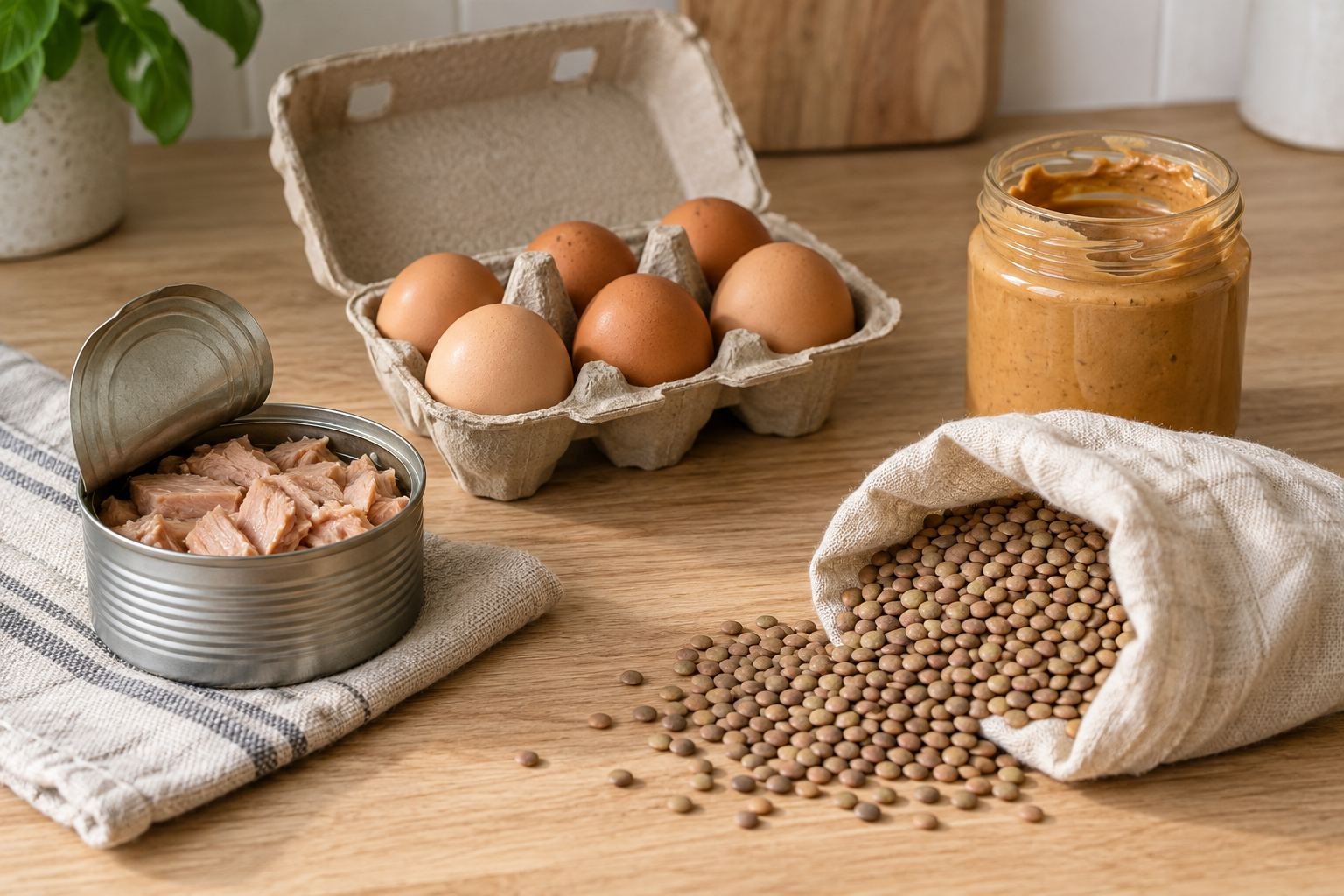
Canned tuna, eggs, dried lentils, rolled oats and milk, in roughly that order. All five keep well, none needs much preparation, and between them they cover a day’s minimum several times over for the price of a single restaurant dish.
One last piece of arithmetic worth carrying around: the difference between a day that lands at 35 grams and one that lands at 55 is usually a single item, not a rebuilt diet. A tin of tuna, a bowl of cottage cheese, a cup of milk with the oats. That is the whole intervention for most people, and it is why reading a long list of high protein foods tends to be less useful than knowing four of them well.
If you take one thing from the table, make it the two numbers for cottage cheese and canned tuna, because those are the ones that convert a vague intention into something you can act on at four in the afternoon with the fridge open. Most people reading about high protein foods do not have a deficiency to fix. They have a day that puts all of it at dinner, and that is a much smaller problem than it feels like.