

Most advice on how to remove dark circles under eyes starts with a product, which is why so much of it fails. Dark circles are three different problems that happen to look the same in the mirror: pigment sitting in the skin, blood vessels showing through it, and a shadow thrown by the hollow underneath. Each one responds to something different, and two of them ignore eye cream completely.
One honest warning before we start: in a lot of cases you can make dark circles less visible, not gone. The dermatologist quoted in Geisinger’s explainer says it plainly, that treatment can reduce how noticeable circles are, but depending on the cause they may not disappear. Anything promising otherwise is selling you something.

Why the same shadow has three different causes
The skin under the eye is the thinnest on the body, and there is very little fat between it and the muscle. That means anything underneath shows through, and anything that irritates the surface leaves a mark that lingers. Mayo Clinic’s list of causes runs from genetics and aging skin through sun exposure, eczema and contact dermatitis, rubbing or scratching the eyes, pigment changes such as melasma and post-inflammatory hyperpigmentation, smoking, heavy drinking and stress, to puffy lids and hollows that simply cast a shade.
Fatigue is on that list, but not where most people put it. It makes existing circles more noticeable rather than creating them. A quick word on the numbers: there is no clean figure for how many people have each type, because the three overlap constantly and most of us have two at once. What the sources agree on is the mechanism, which is enough to work with.
Dark circles at a glance
| Type | How to tell | What helps most | What it ignores |
|---|---|---|---|
| Pigment | Brown or grey, stays dark when you stretch the skin | Daily sunscreen, not rubbing, vitamin C, niacinamide, azelaic acid, a low-strength retinoid | Cold, caffeine, sleep |
| Blood vessels | Blue or purple, fades while the skin is stretched | Cold, a raised pillow, caffeine products, time for the skin to thicken | Brightening serums alone |
| Shadow | Deepens with light from above, vanishes when you lift your chin | Corrector used as light, fluid control, filler from an experienced injector | Every cream ever made |
The mirror test that tells you which one you have
Stand in daylight with no makeup on and do two things.
Press gently on the dark area with a fingertip and stretch the skin slightly. If the darkness fades while the skin is taut, you are looking at blood vessels under thin skin. If the color stays exactly where it was, it is pigment.
Then tilt your chin down and look up into the mirror, so the light falls from above. If the darkness deepens into a trench and then disappears when you raise your chin, it is a shadow. The skin may be a perfectly normal color.
Mixed cases are the norm rather than the exception. I have pigment on one side of my family tree and a tear trough that got deeper in my thirties, and together they looked like one stubborn problem until I tested them separately.
If it is pigment
Pigment is the slow half of how to remove dark circles under eyes, and two habits matter more than any product.
The first is sun protection every day, including the few millimetres right under the lashes that almost everyone skips. That thin skin takes UV damage readily, which is why sunscreen sits at the top of the list in most dermatology advice on under-eye darkening. If liquid formulas sting, a mineral stick is easier to place and less likely to creep into the eye.
The second is to stop rubbing. Morning rubbing, tired rubbing, allergy rubbing: that friction is a running engine for pigment, and Mayo Clinic lists rubbing and scratching as a cause in its own right. If your eyes itch for most of spring, treating the itch properly will do more than any brightening serum.
For products, the ingredients worth your money are the same ones used for pigment elsewhere on the face: vitamin C, niacinamide, azelaic acid, and a retinoid at low strength introduced slowly. If you have never used one, the retinol beginner’s guide covers the ramp-up; under the eyes I would start twice a week on dry skin, a rice-grain amount for both eyes, and go up only if nothing flakes. Expect a lighter shade in a few months, not clean skin in three weeks.
Two habits around the sun do more than the products and cost nothing. Sunglasses that actually cover the orbital bone, which keeps you from squinting and rubbing as well as blocking light, and a hat on bright days. Pigment that keeps being re-triggered cannot be out-creamed, and the under-eye area is where most people’s sunscreen stops a centimetre short. Sun habits are the unglamorous foundation of how to remove dark circles under eyes.
If a year of gentle products changes nothing, a dermatologist has stronger options: prescription-strength tyrosinase inhibitors, a course of superficial chemical peels aimed at the pigment, or laser work. These are also the point at which it is worth confirming that what you have is pigment at all, because melasma and post-inflammatory marks respond differently and both show up on Mayo Clinic’s cause list.
One more thing that quietly makes pigment worse: taking makeup off badly. Scrubbing at waterproof mascara with a dry pad drags the thinnest skin on your face every single night. An oil or balm cleanser, held in place for a few seconds and then wiped once, removes more with less friction.
If it is blood vessels

This is the bluish version, the one that fades under a stretched fingertip. Thin skin, a dense network of vessels underneath, and nothing in between to soften them.
Cold works, briefly and reliably. Geisinger’s advice is to apply cold gently with an ice pack wrapped in a towel or a bag of frozen vegetables, which constricts the vessels. It buys you a couple of hours before an event. A metal spoon from the fridge does the same, and so does a cool gel eye mask, which has the advantage of staying put while you get on with something else.
Sleeping position is the other easy one. Raising your head a little, with an extra pillow or by lifting the head of the bed, keeps fluid from pooling under the eyes overnight. If you wake up puffiest on the side you slept on, that is the mechanism in action.
Caffeine is the ingredient most often used here, and it is one of three that Geisinger names alongside hyaluronic acid and vitamin K. It narrows vessels temporarily and takes the edge off mild puffiness. Treat it the way you treat cold: a morning tool rather than a fix. The hyaluronic acid side is about plumping the skin so there is more of it between the vessels and the surface, which is also why a retinoid helps here over months.
Salt and alcohol both show up here within a day. Both cause the body to hold water, and the first place that shows is the loose tissue around the eye. You do not need to cut either permanently to see the difference. Skipping both the night before something that matters is usually enough to notice, which is the cheapest experiment in how to remove dark circles under eyes and a more useful one than any product trial.
Two things are worth ruling out if the color arrived suddenly or looks severe. Allergies dilate those vessels, and so does anemia, which Geisinger lists along with dehydration, thyroid problems and alcohol. A blood test is a cheap way to check the boring explanation before you spend money on creams.
If it is a shadow
This is the type that creams cannot reach, and the reason so many eye products feel like a con. If the darkness is a shade thrown by a hollow or a slightly swollen lid, your skin color is fine. Nothing in a jar changes the shape of a face.
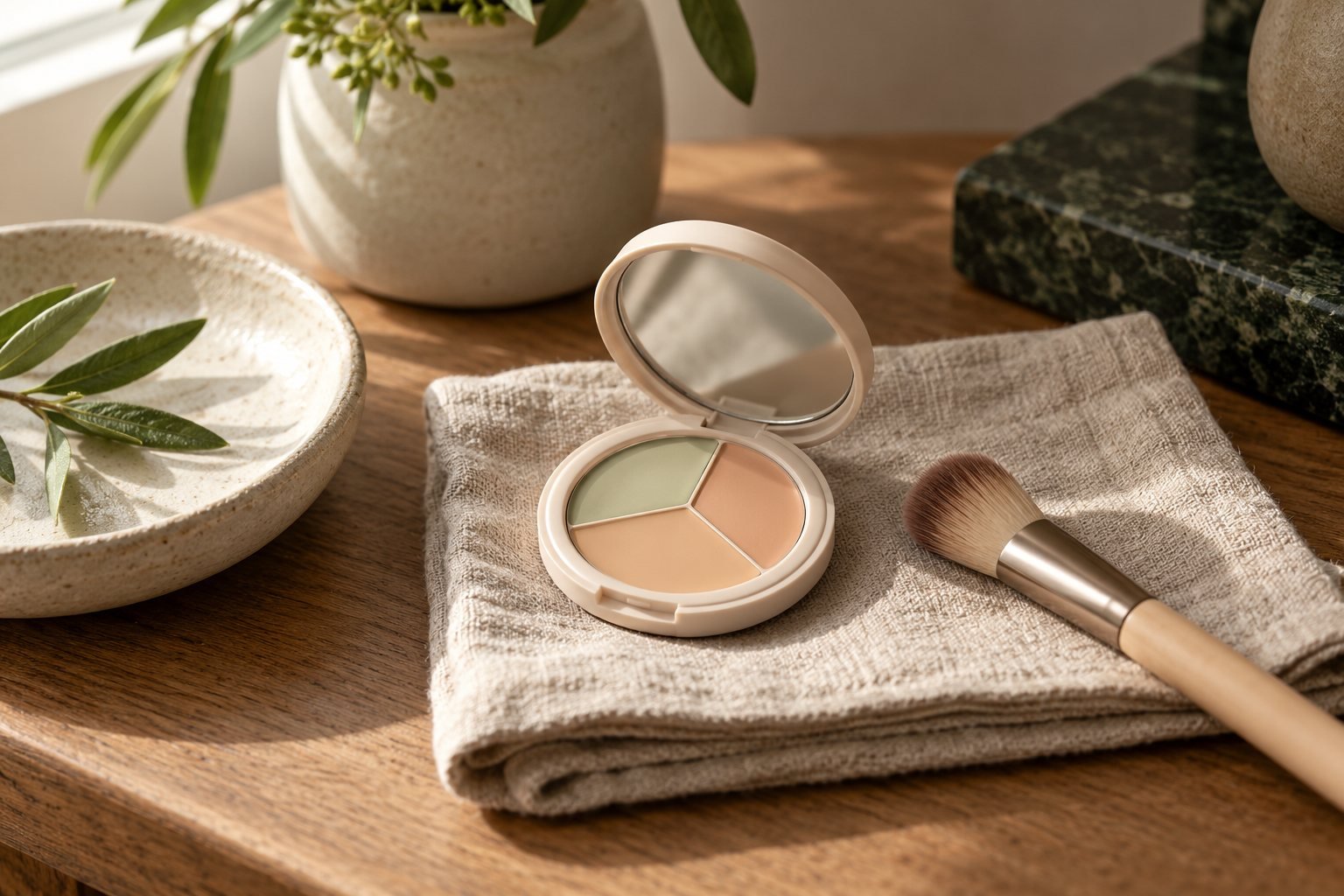
Three things do something here. Makeup used as light rather than coverage: a thin layer of a peach or apricot corrector under a concealer one shade lighter than your skin, pressed into the hollow instead of wiped across it. Heavy concealer does the opposite, settling into the crease and drawing a line exactly where you did not want one.
Fluid control, because a puffy lid deepens the shade: the raised pillow, less salt the night before something that matters, less alcohol, and cold in the morning.
Filler, which is the only thing that fills a hollow. It is an in-office treatment with real risks around the eye, including bruising, lumps and swelling, and it belongs with an experienced injector rather than the cheapest appointment in town. Geisinger lists fillers, chemical peels and laser as the usual in-office routes, with peels and laser aimed at the pigment type instead.
Worth knowing before you book anything: a hollow that appeared recently and a hollow you have had since your twenties are different jobs. Volume loss with age is gradual and responds well to filler. A tear trough you were born with is anatomy, and overfilling it is the most common way this goes wrong, leaving a puffy shelf that looks worse in daylight than the shadow did. A conservative injector who treats it across two appointments is the safer version.
What barely works, and why it keeps selling
Cucumber slices and cold tea bags are cold and wet, and the cold is the entire mechanism. Keep them if you enjoy them; the cucumber is doing nothing the fridge could not.
Drinking three liters of water does not lighten pigment. Dehydration can make puffiness more obvious, so steady fluid through the day helps the vessel and shadow types a little, which is not the same as a treatment.
Heavy concealer every single day tends to make things look worse over months, because the skin gets dragged in the morning and rubbed again at night when it comes off.
And eight hours of sleep, worth having for about forty other reasons, only removes the part of the circle that fatigue added on top. That is usually less than people hope.
A routine that covers all three

If you are not sure which type you have, or you have two, this is the version of how to remove dark circles under eyes that helps every cause and harms none of them.
- Morning: gentle cleanse, a caffeine product on puffy days, moisturizer, sunscreen over the whole under-eye area. Cold first when the puffiness is obvious.
- Evening: gentle cleanse, a low-strength retinoid two or three nights a week once your skin tolerates it, a bland moisturizer on the other nights.
- All day: no rubbing. Treat the itch if there is one.
- Night: head propped a little higher.
- Every month: one photo, same light, same time of day.
Give it three months before you judge it. Pigment and skin thickness move on that timescale, and the week-to-week swing from sleep, salt and allergies is large enough to hide real progress. The monthly photo is the only honest referee, which is also the approach behind the skin care routine in your 30s.
Questions people ask about dark circles under eyes
Can dark circles be removed permanently?
Pigment and vessel types can be made considerably lighter and kept that way with sun protection and a retinoid, though they tend to drift back if you stop. A hollow is structural, so filler lasts as long as the filler does, usually several months to a couple of years. Genetics set the floor you are working toward.
How long does it take to see a difference?
Cold and caffeine work within minutes and fade within hours. Pigment work takes eight to twelve weeks before the change is visible in a photograph, and longer if sun exposure continues. Filler is immediate once the swelling settles.
Does sleep actually help dark circles?
It helps the part that fatigue contributes, which is real but modest. Mayo Clinic puts fatigue among the things that make circles more noticeable rather than among the root causes. If you sleep badly most nights, the sleep is worth fixing for its own sake, and the faster-to-sleep guide is a better starting point than an eye cream.
Do dark circles mean something is wrong with my health?
Usually not. Genetics and the structure of your face explain most cases, and Mayo Clinic describes dark circles as something that is rarely a medical problem. The exceptions are worth knowing: anemia, thyroid problems and untreated allergies all show up in the under-eye area, and all three are simple to check. If the circles came on quickly, got worse steadily, or arrived with other symptoms, that is a reason to ask rather than to shop.
Are expensive eye creams better than a face moisturizer?
Not inherently. What matters is the active ingredient and whether the formula is gentle enough for the area. A plain moisturizer plus sunscreen plus a low-strength retinoid beats most expensive eye creams, and costs less than one of them.
When it is worth seeing a doctor
Dark circles are usually cosmetic rather than medical. Mayo Clinic’s advice is to have it looked at when the change appears under one eye only and keeps getting worse, and to see a dermatologist if makeup and home measures are not helping. Geisinger gives the same one-sided rule.
I would add two situations of my own. If the circles arrived with fatigue that does not lift, or alongside itchy, streaming eyes for most of the year, then the circles are a symptom and the thing worth treating sits underneath them.
Start with the mirror test, give the boring habits three months, and spend the money only on the cause you actually have. That is less satisfying than a new jar on the shelf, and it is the part that works.