
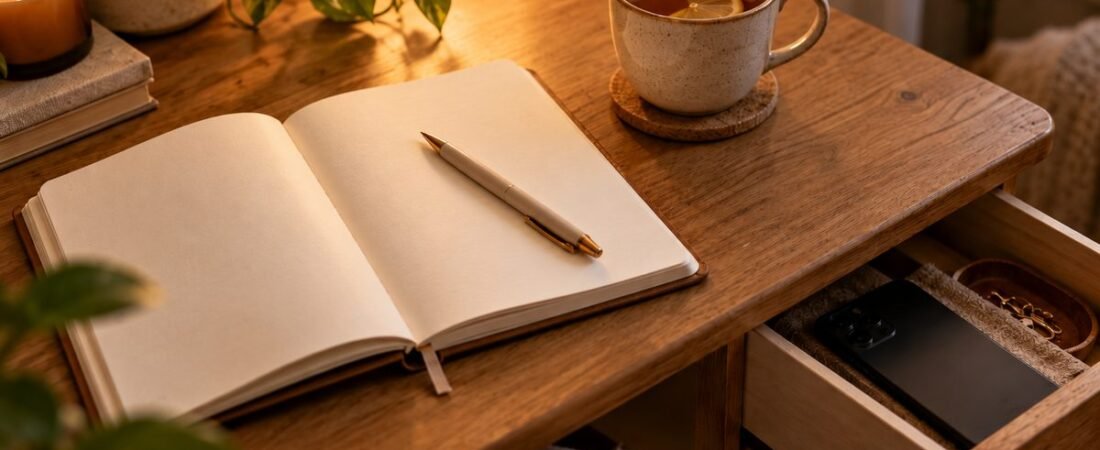
This post is about offline hobbies you can fit into an ordinary busy week, without quitting your phone or moving to a cabin. It starts with what the numbers say about phone use, then gives you twelve no-phone ideas in four groups (calm, move, create and connect), each with what you need and a first step. At the end there’s a gentle seven-day plan for trying them.
One honest warning before we start: this is not a digital detox, and it won’t make your phone less tempting. In Pew Research Center’s 2026 survey, only 25% of Americans who tried to cut back on smartphone time said they were extremely or very successful, while 52% were somewhat successful and 23% weren’t. Big resolutions mostly fail. That’s why the plan below is small: one offline block a day, starting at 15 minutes.
Why so many people are searching for offline hobbies
The interest is easy to explain. In a Pew Research Center survey of 9,750 U.S. adults in May and June 2026, 53% said they spend too much time on their smartphone, and 26% said they use it almost constantly. Among adults aged 18 to 29, 70% said they spend too much time on it. Asked about sleep, 41% said their phone hurts it, and only 5% said it helps. In the UK, Ofcom’s Online Nation 2025 report puts the average at about four and a half hours online a day.
Pinterest searches point the same way. Pinterest’s 2026 Men’s Trend Report lists “no phone ideas” up 581%, “offline hobbies” up 551% and “running club” up 749%. Its 2026 Hobbies Trend Report adds “tracking journal” up 1,264%, “nature meditation” up 146% and “easy air dry clay crafts” up 624%. A quick word on these numbers: Pinterest reports search growth, not results, and it doesn’t state the comparison period, so read them as a sign of curiosity, not proof that anything works. Pew’s survey covers the U.S. and Ofcom’s covers the UK; the pattern is similar, but the figures aren’t directly comparable.
What offline time can and can’t do for you
Offline hobbies have a reasonable evidence base, with limits. A 2009 study of 1,399 adults aged 19 to 89 found that people who reported more enjoyable leisure activities had lower blood pressure, lower cortisol, a smaller waist circumference, a lower BMI and less depression. But the study is correlational: it can’t show that hobbies caused those results, since healthier or less stressed people may simply have more energy for hobbies.
Time outdoors has more direct evidence. A study of an eight-week “nature pill” found that cortisol dropped most after 20 to 30 minutes of sitting or walking in a natural setting. Participants took their nature breaks at least three times a week, in daylight, without social media, phone calls or aerobic exercise. The researchers describe the figure as a rule of thumb, not a precise dose.
For sleep, the usual advice is an “electronics curfew”. Harvard Health reported that 95% of respondents in a National Sleep Foundation poll used an electronic device within an hour of bedtime at least a few times a week, and that some sleep experts advise switching devices off about an hour before bed. That poll can’t prove cause and effect, so treat the curfew as a sensible experiment, not a guarantee.
| Group | Ideas | Time | Good for |
|---|---|---|---|
| Calm | Tracking journal, dream journal, book log | 3–10 minutes | Winding down, noticing patterns |
| Move | 20-minute nature break, running or walking club, evening loop | 20–60 minutes | Stress, fresh air, energy |
| Create | Air dry clay, mini watercolor, origami | 15–30 minutes | Focus, using your hands |
| Connect | Handwritten letter, game night, record listening session | 15–60 minutes | Slower, more present time with people |
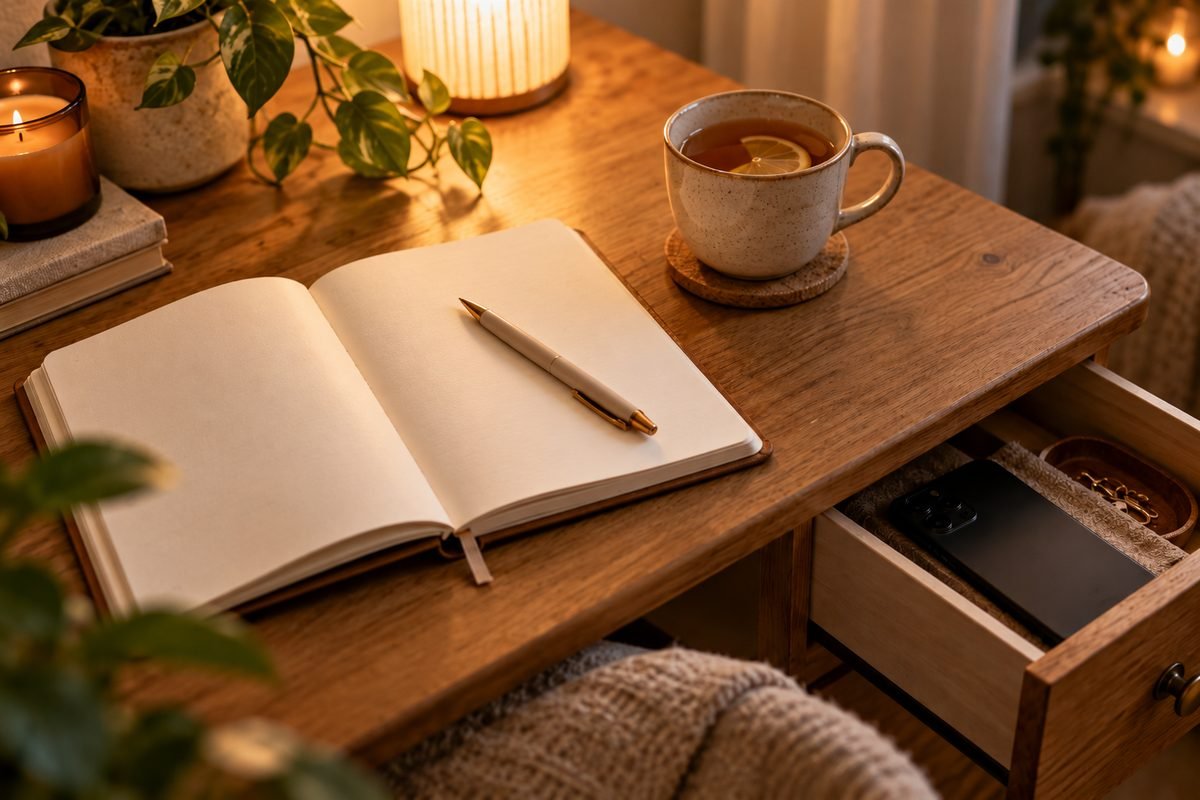
Calm: three quiet hobbies for the end of the day
These three take almost no equipment and fit into the gap between dinner and bed, which is exactly where most evening scrolling happens. They also work well as a replacement for the last screen check of the day.
| Idea | What you need | Time | First step |
|---|---|---|---|
| Tracking journal | A notebook and a pen | 5 minutes | Write the date, hours slept, mood from 1 to 5, and one offline thing you did |
| Dream journal | A notebook beside the bed | 3 minutes | Write down whatever you remember before you reach for your phone |
| Book log | A notebook | 5 minutes | Write the title, the date and a one-line verdict after each book |
How to start a tracking journal
- Pick a small notebook you like. If it’s pretty enough to leave on the nightstand, you’ll use it.
- Draw four columns on the first page: date, hours of sleep, mood (1 to 5) and “offline thing.”
- Fill in one row each evening, before you pick up your phone for the night. It should take about two minutes.
- Keep it to those four columns for the first two weeks. Resist adding more.
- After two weeks, read back through the rows and look for one pattern, such as how your mood looks on days you did something offline.
The point of a tracking journal is noticing, not scoring yourself. I’m not aware of strong evidence for one specific journaling method, so the value here is a small daily pause and a record you can look back on. If a column starts to feel like homework, delete it.

Move: three ways to get outside without your phone
Searches for “running club” are up 749% in Pinterest’s men’s report, but you don’t need a club or a race to get the benefit of time outdoors. The nature-pill research above points to 20 to 30 minutes as the sweet spot for lowering stress hormones, and the fall and winter evenings are a good reason to plan it for daylight hours.
| Idea | What you need | Time | First step |
|---|---|---|---|
| 20-minute nature break | A jacket and a spot with some greenery | 20 minutes | Choose a park, garden or tree-lined street and leave your phone at home |
| Running or walking club | Comfortable shoes and a local group | 45–60 minutes | Search for a beginner-friendly group in your town and go to one session |
| Evening loop | Shoes and a route you like | 15–20 minutes | Walk the same loop after dinner, three evenings this week |
How to take a 20-minute nature break
- Choose a place with some greenery and do it in daylight, such as a park, a garden, a riverside path or even a quiet street with trees.
- Leave your phone at home, or switch it off and keep it in a bag, so you aren’t tempted to check it.
- Plan a loop that takes about 20 minutes, so you don’t need a timer. Sit on a bench or stroll slowly; it’s not a workout.
- Pay attention to something specific: five sounds you can hear, or the colors of the leaves.
- Do it three times in your first week, ideally at a similar time of day.
If your days are dark by the time you finish work, move the break to your lunch hour or the morning. In the study above, the participants chose their own time, place and length, so the best nature break is the one you’ll actually do. Wear warm layers; a cold bench isn’t relaxing.
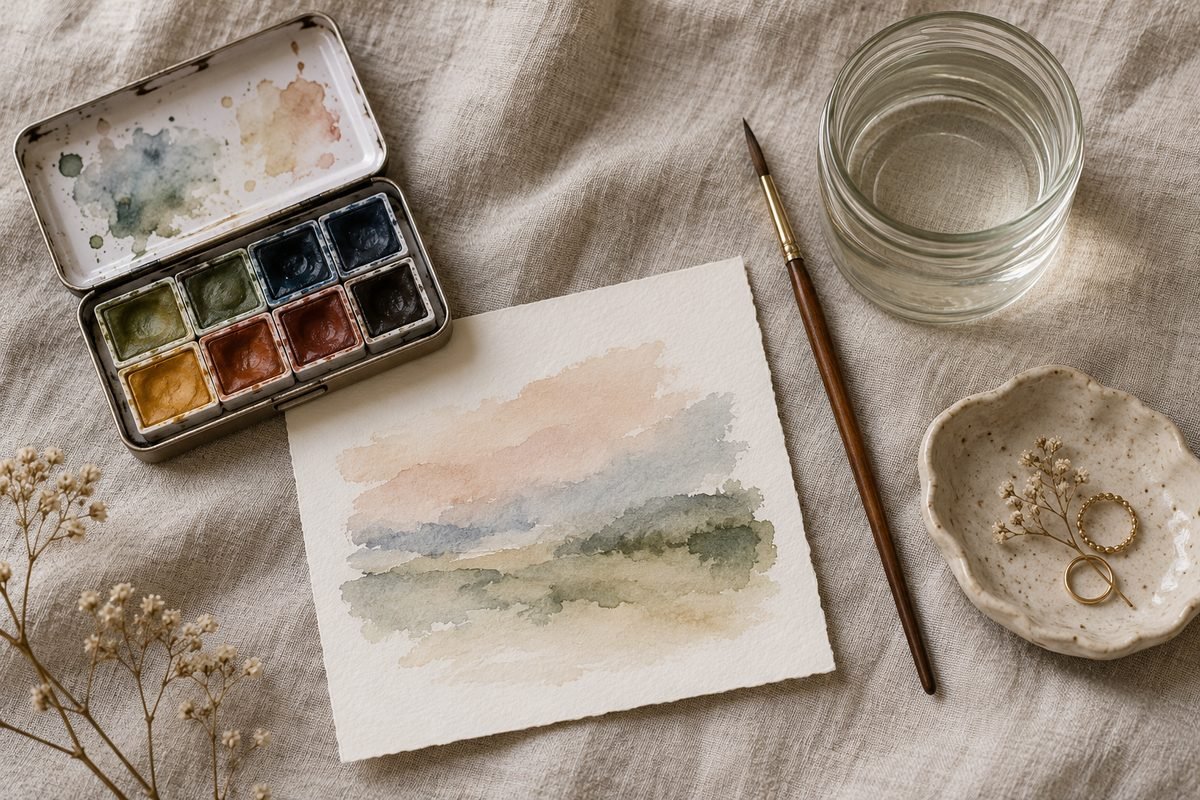
Create: three hobbies for your hands
Craft hobbies are a good fit if your phone habit is mostly about filling idle time, because your hands are occupied. Pinterest’s hobbies report lists “easy air dry clay crafts” up 624%, “mini watercolor painting” up 238% and “origami projects” up 199%. All three are cheap and forgiving, and none needs any talent.
| Idea | What you need | Time | First step |
|---|---|---|---|
| Air dry clay | A pack of air dry clay, a rolling pin, a glass or cookie cutter | 30 minutes | Make a small trinket dish |
| Mini watercolor | A pocket watercolor set, a brush, paper and a jar of water | 20 minutes | Paint a few small squares of color |
| Origami | A pack of origami paper | 15 minutes | Fold a simple paper boat or crane |
How to make your first clay trinket dish
- Roll a ball of clay, about the size of a tangerine, into a flat disc roughly 1/4 inch (6 mm) thick.
- Press a glass or cookie cutter into the clay to cut a circle, and smooth the edge with a wet fingertip.
- Lay the circle over a small bowl or cup to give it a gentle curve, and press the edges up lightly.
- Leave it to dry following the pack’s instructions. Most air dry clays need at least a day.
- When it’s dry, sand any rough edges lightly and, if you like, paint it and seal it.
Keep your supplies visible, in a basket on a shelf or a tray on the coffee table. A hobby you have to dig out of a cupboard is a hobby that doesn’t happen on a tired Tuesday. If you’re worried about drying time, start with the watercolor squares or origami, which give you something to show for it within 15 minutes.
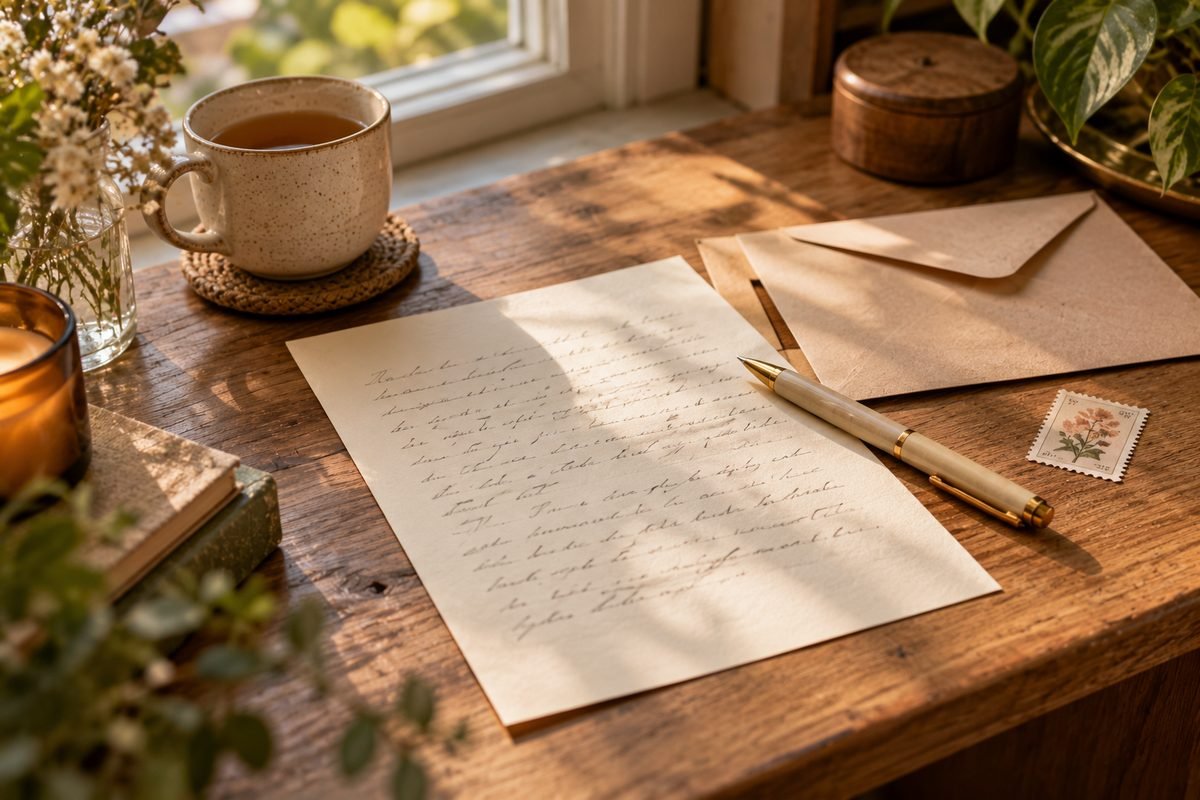
Connect: three slow, analog ways to spend time with people
Offline hobbies don’t have to be solitary. Pinterest’s “Pen Pals” trend lists “penpal ideas” up 90% and “snail mail gifts” up 110%, and its men’s report lists “game night aesthetic” up 103% and “vinyl listening room” up 407%. They all share the same idea: do one thing at a time, together or for someone else.
| Idea | What you need | Time | First step |
|---|---|---|---|
| Handwritten letter | Paper, a pen, an envelope and a stamp | 15 minutes | Write five lines to a friend you haven’t spoken to in a while |
| Game night | A card game or board game | 60 minutes | Invite one friend or family member, and put the phones in a bowl |
| Listening session | A record player, CD player or radio | 30 minutes | Play one album from start to finish, without skipping |
How to write a handwritten letter
- Pick one person: a friend, a grandparent or someone you’ve lost touch with.
- Start with a plain sentence, like “I was thinking about you today because…” It’s easier than a grand opening.
- Write about five lines: one thing you’ve been doing, one thing you remember about them, one question.
- Sign it, address the envelope and stamp it right away, while you’re still in the mood.
- Drop it in a mailbox on your next walk.
Getting a real letter feels different from getting a text, and it’s often a bigger gesture than you expect. If a full letter is too much, a postcard counts. And a game night doesn’t need to be an event; two people and a deck of cards is enough.
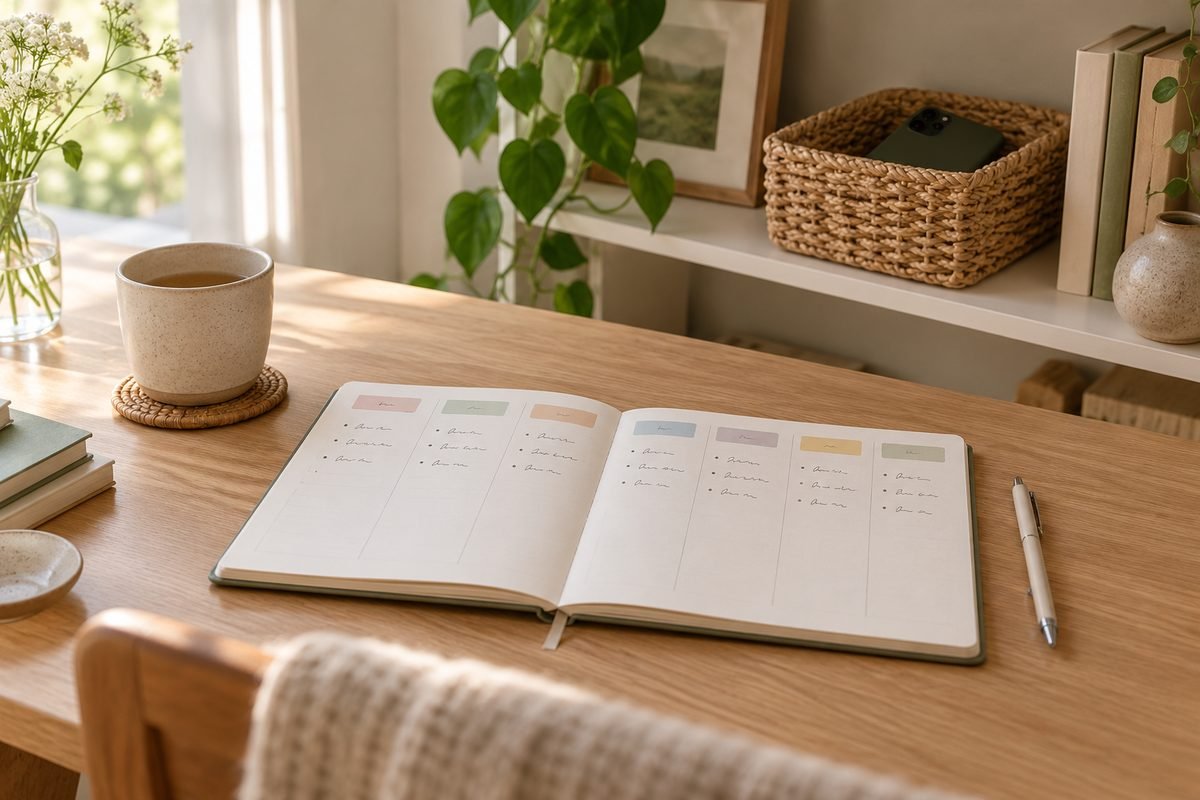
A gentle 7-day plan to try them
The plan has one rule: one offline block a day, 15 to 30 minutes, with your phone in another room. Keeping the phone out of reach is a practical trick, not a study result, but it removes the temptation to check it halfway through. If you can, also stop screens about an hour before bed, as some sleep experts suggest.
| Day | Offline block | Time |
|---|---|---|
| Monday | Set up your tracking journal and fill in the first row | 10 minutes |
| Tuesday | 20-minute nature break in daylight | 20 minutes |
| Wednesday | Put the dream journal by your bed and write in it tomorrow morning | 5 minutes tonight |
| Thursday | Paint a few mini watercolor squares | 20 minutes |
| Friday | Game night with one person, phones in a bowl | 60 minutes |
| Saturday | Make a clay trinket dish | 30 minutes |
| Sunday | Write one handwritten letter, then read back through your journal | 30 minutes |
How to run the week
- Choose your block each day at the same time, such as right after dinner or during your lunch break.
- Put your phone in another room, or in a drawer, for the length of the block.
- If you miss a day, skip it and do the next one. Don’t try to catch up.
- On Sunday, circle the two activities you enjoyed most.
- Keep only those two for the following week, and add more only if you want to.
The goal isn’t to complete the week perfectly. It’s to find the two or three offline habits that fit your life, so that “something else to do” is already waiting the next time you’d normally reach for your phone.
Questions people ask about offline hobbies
Do I need a full digital detox?
No. A full detox is hard to keep up, and Pew’s data shows how often cut-back attempts fall short. A short offline block each day is a more realistic place to start, and you can lengthen it if you enjoy it.
How do I find time for offline hobbies in a busy week?
Attach them to moments you already have: the first 15 minutes after dinner, your lunch break, or the time you’d normally spend scrolling in bed. Small, repeated blocks work better than a big weekend plan you never get to.
Will offline hobbies help me sleep better?
They might, especially if they replace late-night screen time, but there’s no guarantee. In Pew’s survey, 41% of Americans said their phone hurts their sleep, and some experts recommend switching screens off about an hour before bed. If you want a full wind-down, we have a step-by-step evening routine for better sleep. If you have ongoing trouble sleeping, talk to your doctor.
What are the cheapest offline hobbies?
A notebook and pen cost almost nothing, and so do walking, origami paper, postcards and borrowing books from your local library. You can try every idea in this post for a small amount, and most of the supplies for clay and watercolor are inexpensive.
What if I need my phone for work?
Set the offline block for a time that’s clearly yours, such as the evening, and use your phone’s Do Not Disturb mode. If your job requires you to be reachable, start with the nature break or the journal, which only need a few minutes.
Are offline hobbies good for stress?
They can help. Time in nature lowered cortisol in the study above, and people with more enjoyable leisure activities had lower stress markers in the 2009 study, though that one can’t prove cause and effect. Offline hobbies aren’t a replacement for professional support if you’re struggling with anxiety or low mood.
You don’t need a perfect routine or a long break from your phone. Pick one block tonight, even 15 minutes, put the phone in another room, and do one thing with your hands, your feet or a pen. If you enjoy it, do it again tomorrow. That’s how a hobby starts.