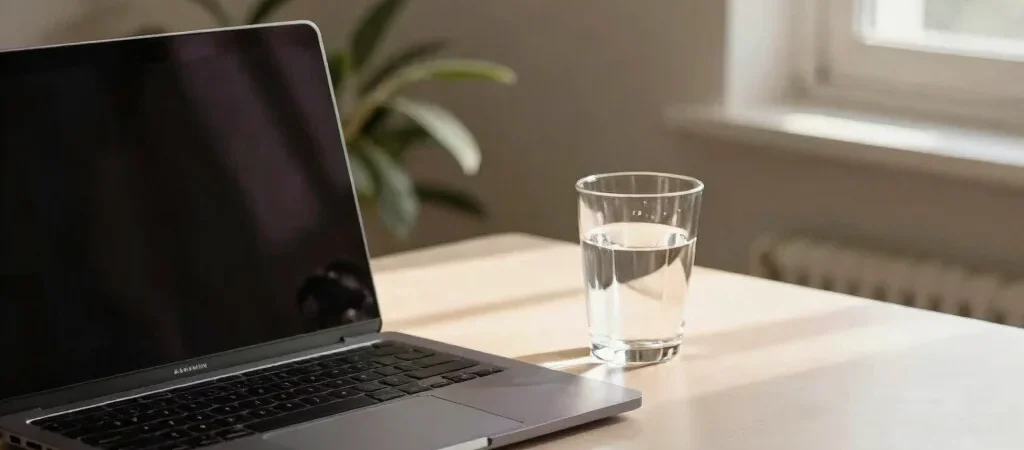
You close the laptop, but your attention is still answering messages while dinner waits to be made. That in-between moment is easy to skip, even though it can help mark the shift from one task to another. A simple transition practice is less about clearing your mind and more about giving your attention somewhere quieter to land.
Begin with one clear cue
Choose a small action that signals the workday is ending: shut the laptop, put your phone face down, or open a window for a minute. Let the cue be consistent enough to recognize, but not so elaborate that it becomes another task to manage. A repeatable beginning makes the pause easier to remember.
Notice what is here
Sit or stand comfortably and notice a few ordinary details: the light in the room, the feeling of your feet on the floor, or the sound beyond the window. If it feels comfortable, take a few unhurried breaths without trying to force them into a particular pattern. When your mind wanders, simply return to one detail you can sense.
Carry the pause forward
After a minute or two, choose the next small action rather than planning the entire evening at once. Fill a glass of water, stretch your shoulders, or begin preparing a meal. Mental balance is not a demand to feel calm on command; sometimes it is simply a more deliberate way to move into what comes next.