Nourish from within: the best natural nutrient sources for colorful everyday bowls
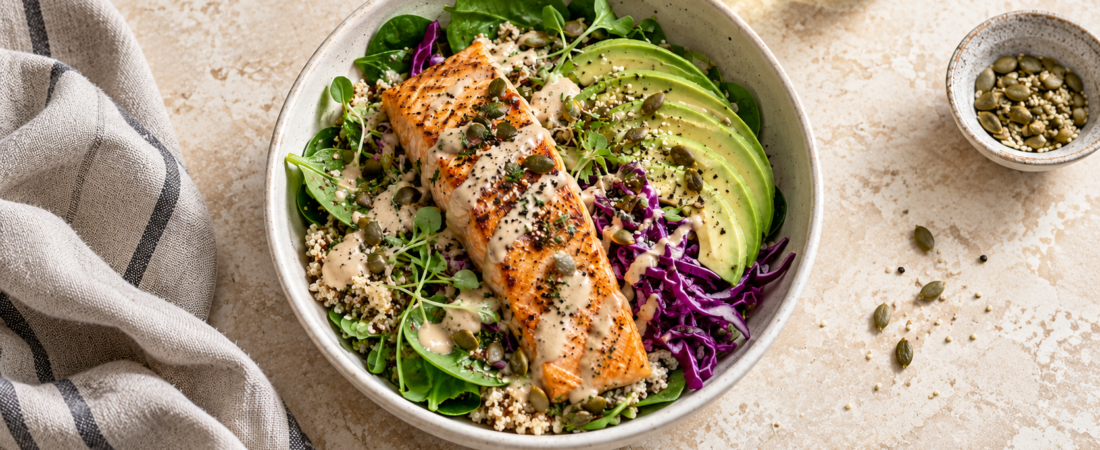
This post does two things. First, it shows where the nutrients your body and skin rely on actually come from in everyday food, with real numbers instead of vague promises. Then it turns those foods into five vibrant bowls: a salmon glow bowl, a green goddess chicken bowl, a berry yogurt bowl for breakfast, a Mediterranean egg bowl and a rainbow tofu bowl. Every recipe is written for one and for two servings, with a carb estimate next to it, so you can pick what fits your day.
One honest warning before we start: the berry yogurt bowl has the most carbs of the five, about 14 grams per serving. Berries and yogurt both carry natural sugars. It’s still on the list because it’s the fastest healthy breakfast here, and there’s an easy swap that brings the number down.
Where the nutrients actually are
“Eat nutrient-dense food” is easy advice and hard to act on, so here are the numbers. One ounce of roasted pumpkin seeds has about 156 mg of magnesium, roughly 37% of the daily value. Half a cup of raw red bell pepper has about 95 mg of vitamin C, more than a whole orange. An ounce of almonds covers around 45% of your daily vitamin E, and a 3-ounce piece of farmed Atlantic salmon delivers close to 2 grams of the omega-3s EPA and DHA. These figures come from the NIH Office of Dietary Supplements, which builds its tables on USDA food data.
The pattern is worth noticing: the foods that score highest are rarely exotic. Seeds, nuts, oily fish, eggs, leafy greens and brightly colored vegetables do most of the work. That’s also why a well-built bowl is such an efficient meal. It puts five or six of these foods on one plate without any extra effort.
| Nutrient | Why it matters | Best everyday sources |
|---|---|---|
| Protein | Keeps you full; the building block for muscle, hair and collagen | Eggs, salmon, chicken, Greek yogurt, tofu |
| Fiber | Supports digestion and steadier blood sugar | Chia seeds, avocado, raspberries, broccoli, leafy greens |
| Omega-3 fats | Support heart health and help keep skin supple | Salmon, sardines, walnuts, chia seeds, ground flaxseed |
| Vitamin C | Your body needs it to make collagen | Red bell pepper, broccoli, kiwi, strawberries |
| Vitamin E | Antioxidant that helps protect cells, including skin cells | Sunflower seeds, almonds, avocado, olive oil |
| Magnesium | Involved in energy production, sleep and muscle function | Pumpkin seeds, chia seeds, almonds, spinach |
| Zinc | Supports wound healing and immune function | Pumpkin seeds, beef, hemp hearts, chickpeas |
| Iron | Carries oxygen; low iron often shows up as low energy | Spinach, lean red meat, tofu, lentils |
A quick word on iron from plants: your body absorbs it less easily than iron from meat, but vitamin C helps. That’s the reason several bowls below pair spinach or tofu with red pepper or lemon. It’s a small habit that makes the same food work harder.
How to build a vibrant bowl
Every bowl in this post follows the same five-part formula. Once you know it, you can build a healthy meal from whatever is in the fridge.
- A green base. One to two cups of spinach, arugula, massaged kale or cauliflower rice for a warm bowl.
- A protein. About a palm-sized portion: salmon, chicken, eggs, tofu or Greek yogurt. This is what keeps you full until the next meal.
- A healthy fat. Half an avocado, a spoonful of tahini, olive oil, nuts or seeds. Vitamins A, E and K are fat-soluble, so the fat helps you absorb what’s in the vegetables.
- Color. A cup or two of red pepper, purple cabbage, tomatoes, carrots or berries. Different colors bring different plant compounds.
- Crunch and acid. Toasted seeds or nuts, plus lemon, lime or a sharp dressing. This is what makes a bowl taste finished instead of virtuous.
A quick word on the numbers in the recipes. The carb estimates are calculated from USDA averages for each ingredient, and they show net carbs: total carbohydrates minus fiber. Brands and produce sizes differ, so if you track closely, your own labels are the final word.
Five vibrant bowls at a glance
| Bowl | Key nutrients | Net carbs per serving (approx.) | Time |
|---|---|---|---|
| Salmon glow bowl | Omega-3s, vitamin E, magnesium | about 8–9 g | 20 minutes |
| Green goddess chicken bowl | Protein, vitamin C, vitamin K | about 9–10 g | 15 minutes (with cooked chicken) |
| Berry Greek yogurt bowl | Protein, fiber, omega-3s | about 14 g | 5 minutes |
| Mediterranean egg bowl | Protein, vitamin C, healthy fats | about 9–10 g | 15 minutes |
| Rainbow tofu bowl | Plant protein, iron, vitamin C | about 12 g | 20 minutes |
Salmon glow bowl with avocado and pumpkin seeds
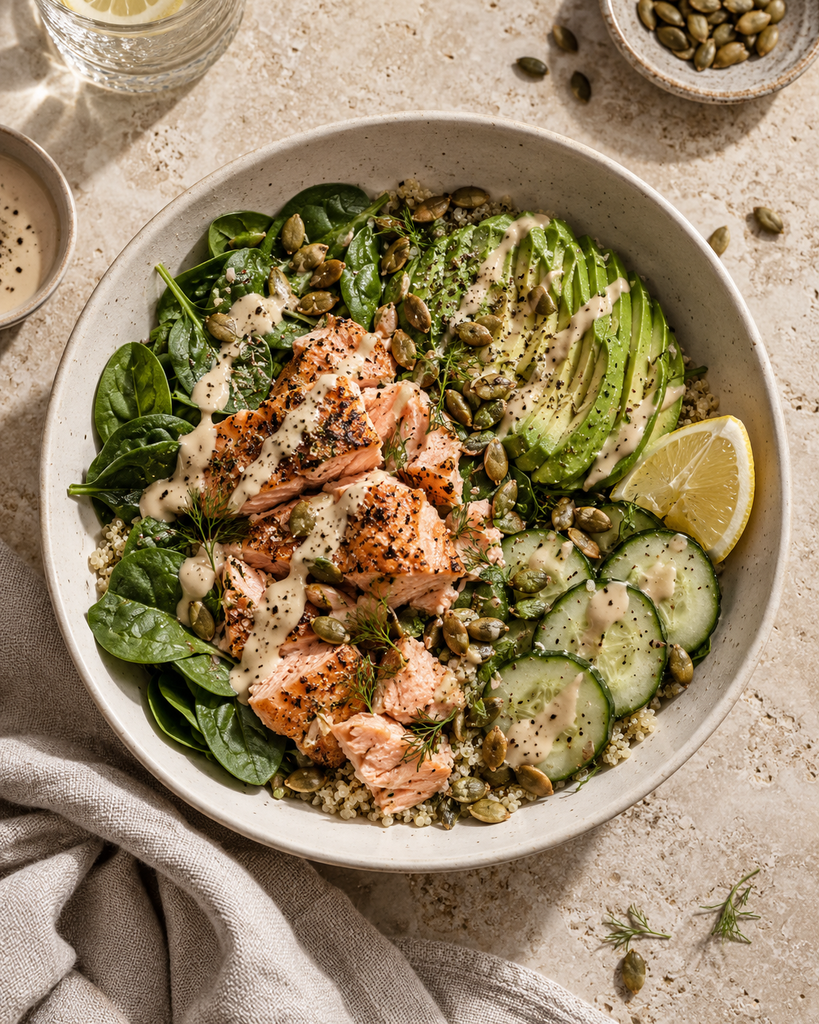
If you only make one bowl from this post, make this one. It covers more of the nutrient table than any other recipe here: omega-3s from the salmon, vitamin E from the avocado, magnesium and zinc from the pumpkin seeds, and a lemon-tahini dressing that ties it together. The salmon can be baked or pan-seared; both take about the same time.
Ingredients
| Ingredient | 1 serving | 2 servings |
|---|---|---|
| Salmon fillet, skin on or off | 4–5 oz (120–140 g) | 2 fillets |
| Baby spinach or arugula | 2 cups (60 g) | 4 cups (120 g) |
| Avocado, sliced | 1/2 | 1 |
| Cucumber, sliced | 1/2 medium | 1 medium |
| Pumpkin seeds, toasted | 1 tbsp | 2 tbsp |
| Tahini | 1 tbsp | 2 tbsp |
| Lemon juice | from 1/2 lemon | from 1 lemon |
| Water, for the dressing | 1 tbsp | 2 tbsp |
| Salt, black pepper, chili flakes | to taste | to taste |
Steps
- Heat the oven to 400 °F (200 °C). Season the salmon with salt and pepper and bake it on a lined tray for 12–14 minutes, until it flakes easily. Or pan-sear it skin side down for 4 minutes, then flip for 2–3 minutes.
- While it cooks, toast the pumpkin seeds in a dry pan for 2–3 minutes, until they start to pop. Take them off the heat right away; they burn fast.
- Whisk the tahini, lemon juice and water until smooth. It will look grainy at first, then turn creamy. Add more water, a teaspoon at a time, until it pours.
- Put the greens in a bowl, add the cucumber and avocado, and break the salmon into large flakes on top.
- Drizzle with the dressing and finish with the pumpkin seeds and a pinch of chili flakes.
Tahini is the biggest carb source here after the cucumber, at about 2 grams of net carbs per tablespoon. If you want the bowl lighter, use half the tahini and a little olive oil. Leftover salmon keeps in the fridge for up to 3 days, so baking two fillets and saving one for tomorrow’s bowl is an easy win.
Green goddess chicken bowl
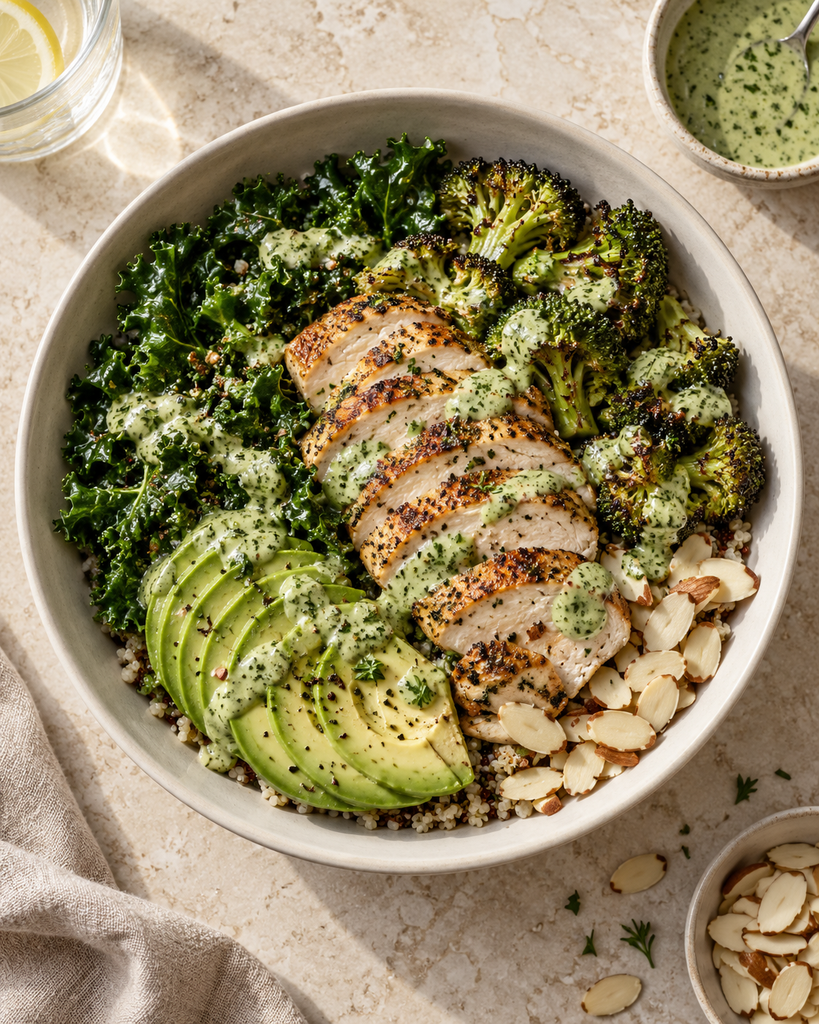
This is the bowl for days when you have cooked chicken in the fridge and ten minutes. The dressing does the heavy lifting: Greek yogurt blended with a big handful of herbs, lemon and garlic. It’s creamy, bright green and much higher in protein than a mayonnaise-based version. Kale and broccoli add vitamin C and vitamin K, and the almonds bring the crunch.
Ingredients
| Ingredient | 1 serving | 2 servings |
|---|---|---|
| Cooked chicken breast, sliced | 4 oz (115 g) | 8 oz (230 g) |
| Kale, stems removed, chopped | 2 cups | 4 cups |
| Olive oil, for the kale | 1/2 tsp | 1 tsp |
| Broccoli florets, steamed or roasted | 1 cup | 2 cups |
| Avocado, sliced | 1/4 | 1/2 |
| Sliced almonds | 1 tbsp | 2 tbsp |
| Plain Greek yogurt (dressing) | 3 tbsp | 6 tbsp |
| Fresh herbs: parsley, basil, chives (dressing) | a small handful | a large handful |
| Lemon juice (dressing) | from 1/2 lemon | from 1 lemon |
| Garlic (dressing) | 1/2 small clove | 1 small clove |
| Salt | to taste | to taste |
Steps
- Blend the yogurt, herbs, lemon juice, garlic and a pinch of salt until smooth and green. If it’s too thick, add a splash of water.
- Put the kale in a bowl with the olive oil and a pinch of salt, and massage it with your hands for about a minute, until it softens and darkens.
- Add the broccoli, chicken and avocado.
- Spoon the dressing over the top and sprinkle with the almonds.
Massaging the kale sounds fussy, but it’s the step that makes raw kale pleasant to eat. It takes one minute and turns tough leaves tender. The dressing keeps in a jar for 3–4 days, so it’s worth making a double batch.
Berry Greek yogurt breakfast bowl
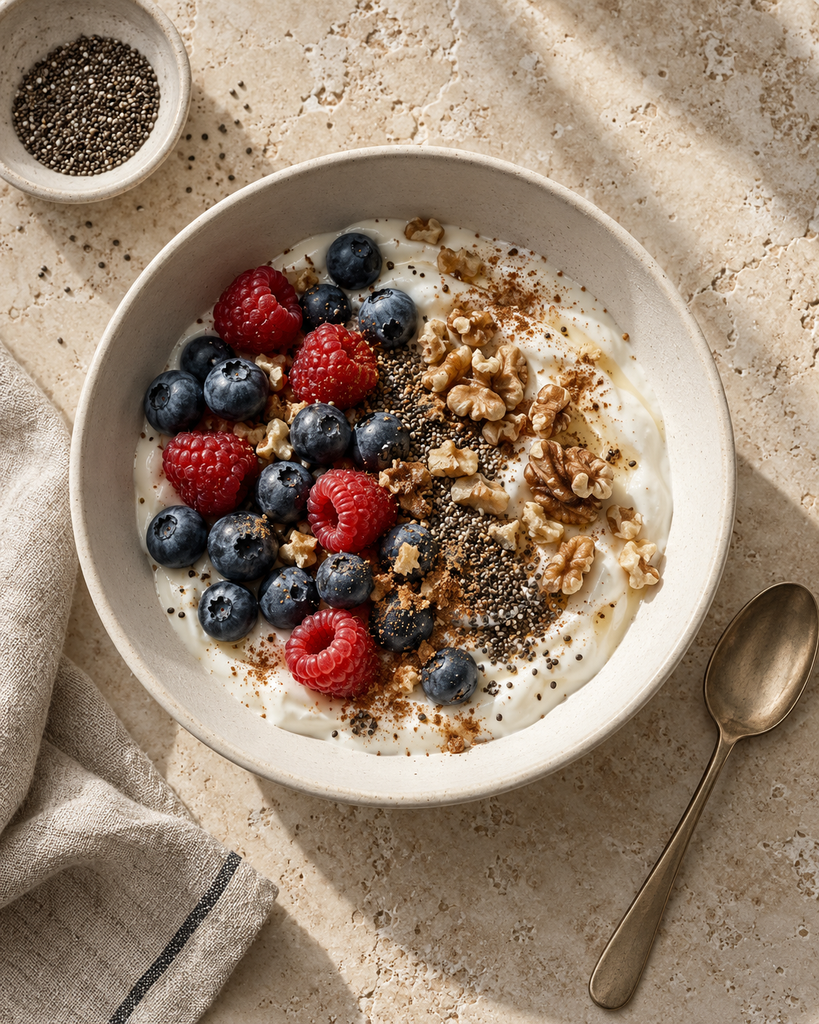
The fastest recipe here and the only sweet one. Greek yogurt gives you a solid dose of protein first thing in the morning, chia seeds add fiber and plant omega-3s, and walnuts make it feel like a real meal instead of a snack. This is also the bowl with the most carbs, about 14 grams, because both the yogurt and the berries carry natural sugars.
Ingredients
| Ingredient | 1 serving | 2 servings |
|---|---|---|
| Plain full-fat Greek yogurt, unsweetened | 3/4 cup (170 g) | 1 1/2 cups (340 g) |
| Blueberries | 1/4 cup | 1/2 cup |
| Raspberries | 1/4 cup | 1/2 cup |
| Chia seeds | 1 tbsp | 2 tbsp |
| Walnuts, chopped | 1 tbsp | 2 tbsp |
| Ground cinnamon | 1/2 tsp | 1 tsp |
| Vanilla extract (optional) | a few drops | 1/4 tsp |
Steps
- Stir the chia seeds, cinnamon and vanilla into the yogurt.
- Let it sit for 5 minutes. The chia absorbs some liquid and thickens the yogurt slightly.
- Top with the berries and walnuts.
The lower-carb version: use only raspberries instead of a mix. Raspberries have about twice the fiber of blueberries, and swapping them brings the bowl down by roughly 3 grams of net carbs. For a make-ahead breakfast, layer everything in a jar the night before; by morning the chia turns it into something close to a pudding.
Mediterranean egg bowl with cauliflower rice
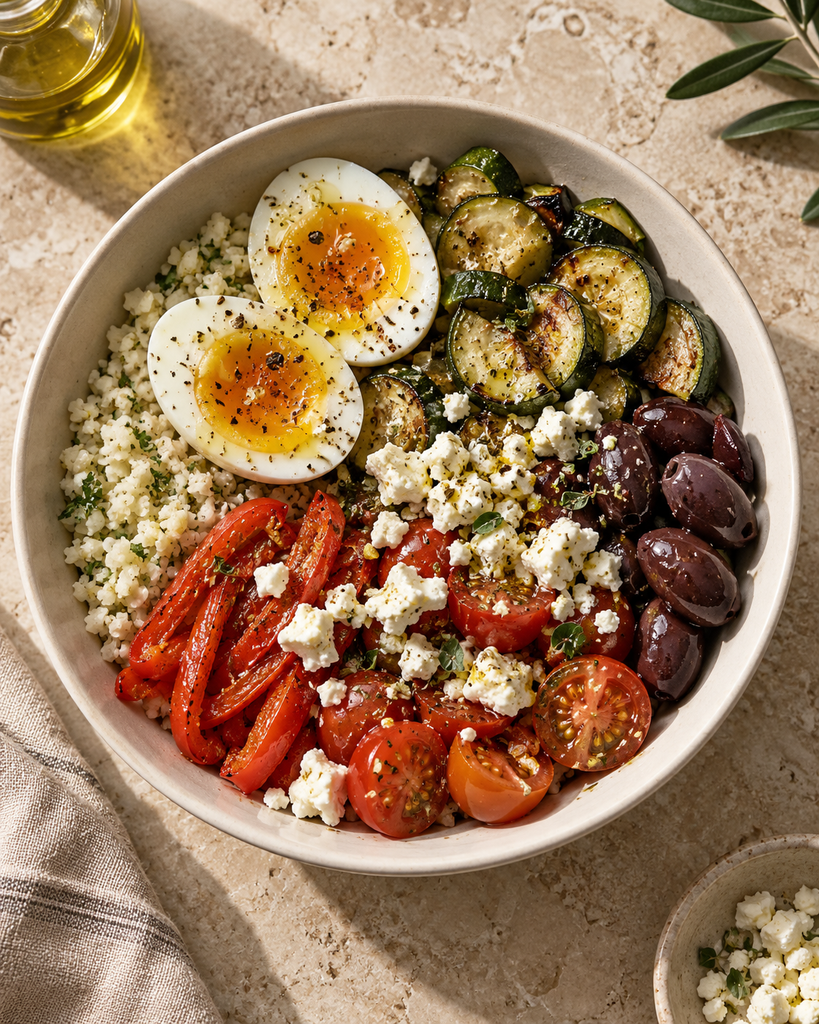
A warm bowl that works for lunch or a quick dinner. Cauliflower rice stands in for grains, eggs bring the protein, and the vegetables cover vitamin C from the pepper and tomatoes. Olives and a drizzle of extra-virgin olive oil make it taste like a Greek salad that grew up. The soft-boiled eggs are the only timing that matters: 6½ to 7 minutes gives you set whites and a jammy yolk.
Ingredients
| Ingredient | 1 serving | 2 servings |
|---|---|---|
| Eggs | 2 | 4 |
| Cauliflower rice, fresh or frozen | 1 cup | 2 cups |
| Extra-virgin olive oil | 1 tsp, plus a drizzle | 2 tsp, plus a drizzle |
| Red bell pepper, sliced | 1/2 | 1 |
| Cherry tomatoes, halved | 1/2 cup | 1 cup |
| Zucchini, sliced | 1/2 small | 1 small |
| Kalamata olives | 5–6 | 10–12 |
| Feta, crumbled | 1 tbsp | 2 tbsp |
| Hemp hearts | 1 tsp | 2 tsp |
| Dried oregano, salt, lemon | to taste | to taste |
Steps
- Bring a small pot of water to a boil. Lower the eggs in gently with a spoon and cook for 6½–7 minutes. Move them to a bowl of cold water.
- Heat the olive oil in a pan over medium-high heat. Cook the cauliflower rice for 4–5 minutes, stirring, and season with salt and oregano. Move it to a bowl.
- In the same pan, sear the zucchini slices for 1–2 minutes per side, until lightly charred.
- Arrange the pepper, tomatoes, zucchini, olives and feta on the cauliflower rice.
- Peel and halve the eggs, place them on top, sprinkle with hemp hearts, and finish with a drizzle of olive oil and a squeeze of lemon.
Frozen cauliflower rice works just as well as fresh here, and it saves the most annoying step. Cook it straight from frozen and give it an extra minute or two so the water evaporates; otherwise the bowl turns soggy.
Rainbow tofu bowl with ginger-lime dressing
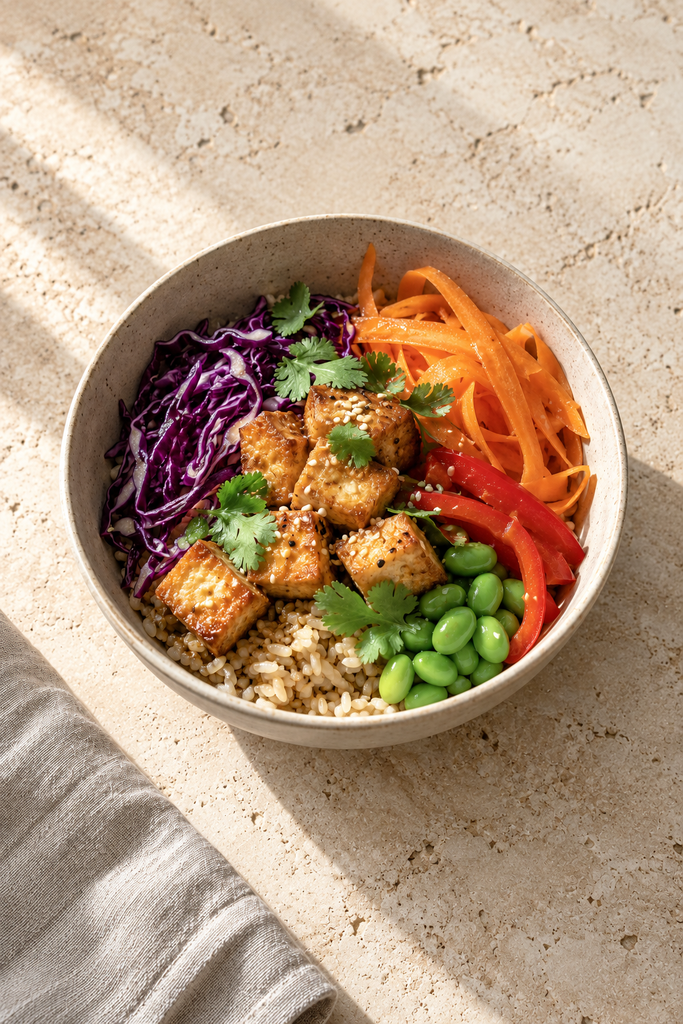
The plant-based bowl of the five, and the most colorful. Firm tofu brings protein and iron, red pepper brings the vitamin C that helps your body absorb that iron, and purple cabbage, carrot and edamame fill in the rest of the rainbow. The ginger-lime dressing is sharp and salty, which is exactly what tofu needs.
Ingredients
| Ingredient | 1 serving | 2 servings |
|---|---|---|
| Firm tofu, pressed and cubed | 4 oz (115 g) | 8 oz (230 g) |
| Neutral oil, for frying | 1 tsp | 2 tsp |
| Purple cabbage, shredded | 1 cup | 2 cups |
| Carrot, peeled into ribbons | 1/2 small | 1 small |
| Shelled edamame | 1/4 cup | 1/2 cup |
| Red bell pepper, thinly sliced | 1/2 | 1 |
| Soy sauce or tamari (dressing) | 1 tbsp | 2 tbsp |
| Toasted sesame oil (dressing) | 1 tsp | 2 tsp |
| Lime juice (dressing) | from 1/2 lime | from 1 lime |
| Fresh ginger, grated (dressing) | 1/2 tsp | 1 tsp |
| Sesame seeds and fresh cilantro | for the top | for the top |
Steps
- Wrap the tofu in a clean kitchen towel and press it under something heavy for 10 minutes. Cut it into cubes.
- Heat the oil in a nonstick pan over medium-high heat and fry the tofu for 8–10 minutes, turning, until golden on most sides.
- Whisk the soy sauce, sesame oil, lime juice and ginger in a small bowl.
- Arrange the cabbage, carrot, edamame and pepper in sections around the bowl and put the tofu in the middle.
- Pour the dressing over everything and finish with sesame seeds and cilantro.
Pressing the tofu is the step people skip, and it’s the one that decides whether the cubes turn crisp or steam in the pan. If you don’t have 10 minutes, press it for 3 and pat it very dry; it’s not perfect, but it’s close. Carrots are the sweetest vegetable in this bowl, so if you’re watching carbs, keep them to the half carrot listed.
Questions people ask about nutrient sources
What are the best natural sources of nutrients?
The foods that show up again and again at the top of the nutrient tables are surprisingly ordinary: leafy greens, red peppers and broccoli, oily fish like salmon, eggs, Greek yogurt, and nuts and seeds such as almonds, pumpkin seeds and chia. Together they cover protein, fiber, healthy fats and most of the vitamins and minerals people tend to fall short on.
Can you get enough nutrients on a low carb diet?
Yes, if the low carb plate is built from whole foods rather than mostly meat and cheese. Leafy greens, non-starchy vegetables, eggs, fish, nuts, seeds, avocado and berries are all naturally low in carbs and high in nutrients. The bowls above stay between roughly 8 and 14 grams of net carbs and still cover a wide range of the nutrient table.
Which foods are good for your skin?
Your body needs vitamin C to make collagen, so red peppers, broccoli, kiwi and strawberries are a good start. Omega-3 fats from salmon, walnuts and chia, vitamin E from almonds and sunflower seeds, and zinc from pumpkin seeds also play a role. No single food changes your skin overnight; a consistent diet built from these foods is what counts.
Can I meal prep these bowls?
Yes, with one rule: store the parts separately and assemble the bowl when you eat it. Cooked proteins and dressings keep well, and the USDA’s guidance on leftovers is to eat refrigerated leftovers within 3–4 days. Cut avocado and dress greens right before eating, or they turn brown and soggy.
Do I still need supplements?
Many people can cover their needs with food, but not everyone. Pregnancy, certain diets, medical conditions and some medications change the picture. If you’re unsure, ask your doctor or a registered dietitian; a simple blood test answers more than any article can.
Healthy food doesn’t need to be complicated. A green base, a good protein, a healthy fat, a handful of color and something crunchy cover most of what your body asks for. Start with the salmon glow bowl if you want the most nutrients in one meal, and keep the berry yogurt bowl for the mornings when five minutes is all you have.